From concept to clarity
Theraheal had a vision—to support individuals dealing with serious mental health challenges, not just mild conditions. The team had some design concepts, but there was no real product, and the stakeholders weren't satisfied with the direction. I was brought in as an independent product designer to strategize, refine, and make it investor-ready.
Identifying the gaps
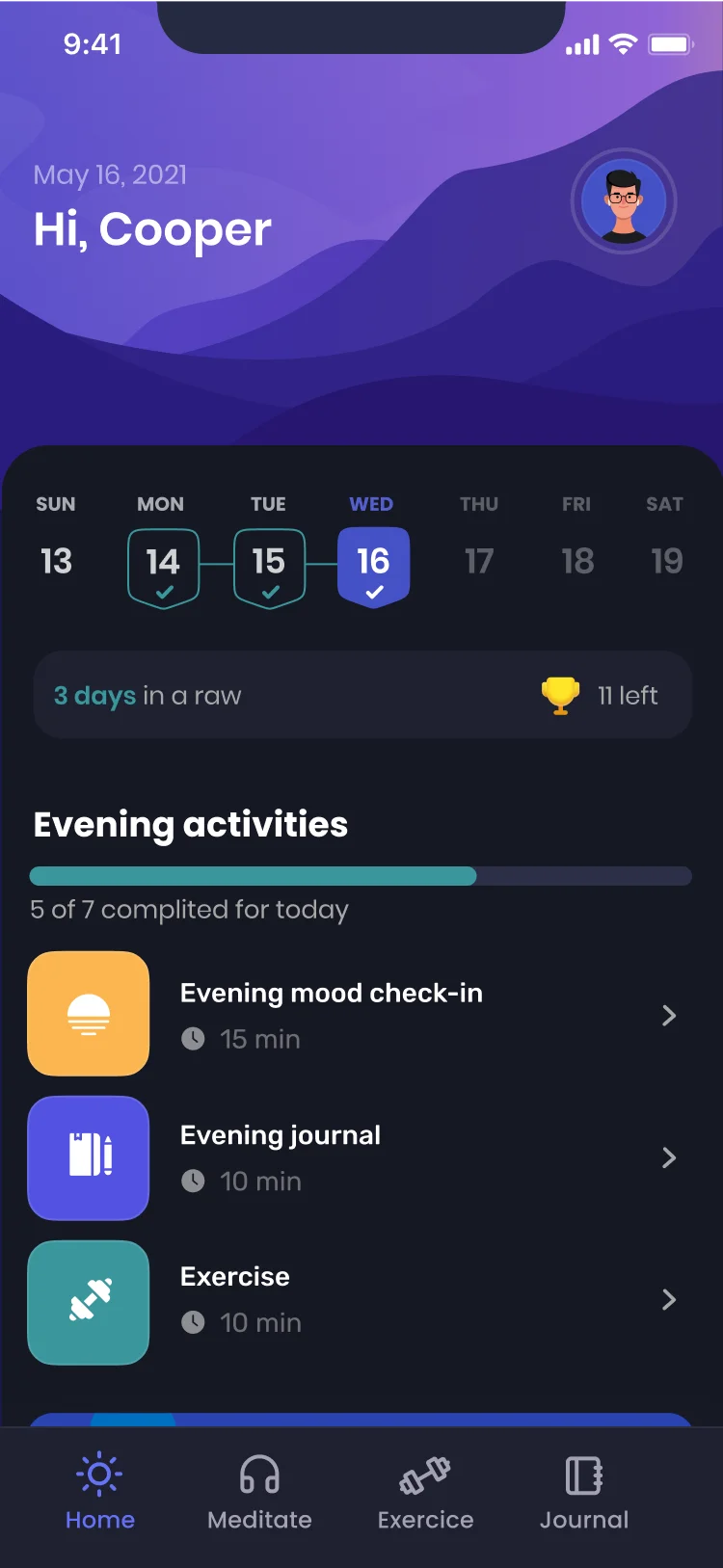
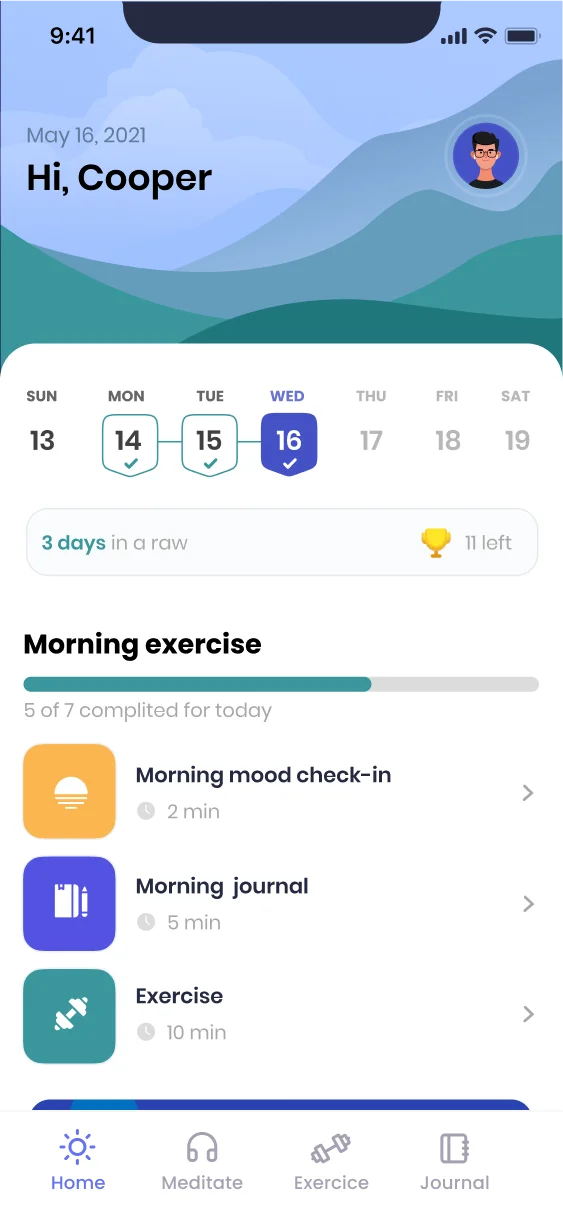
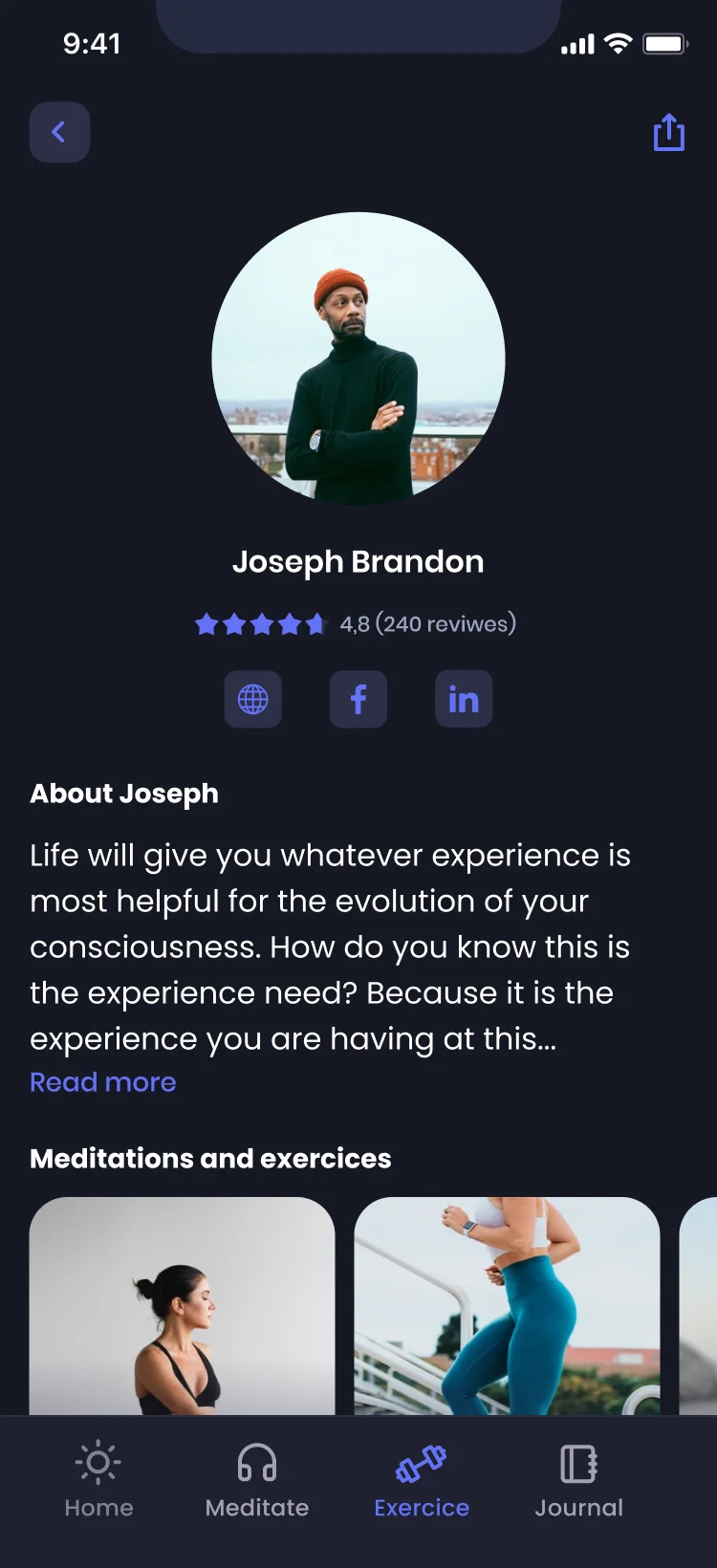
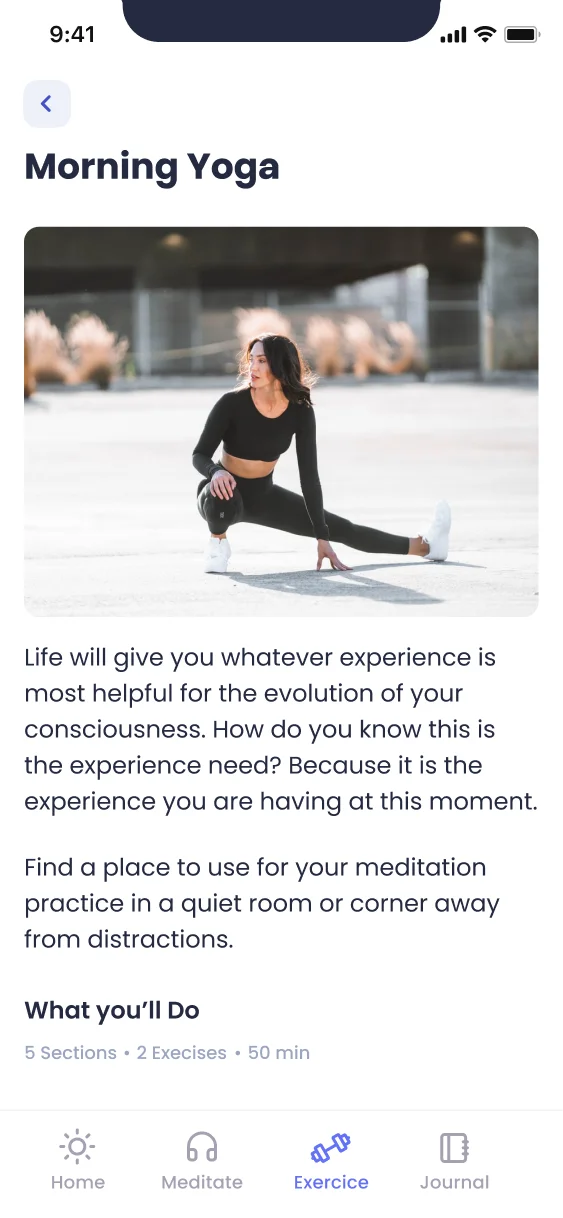
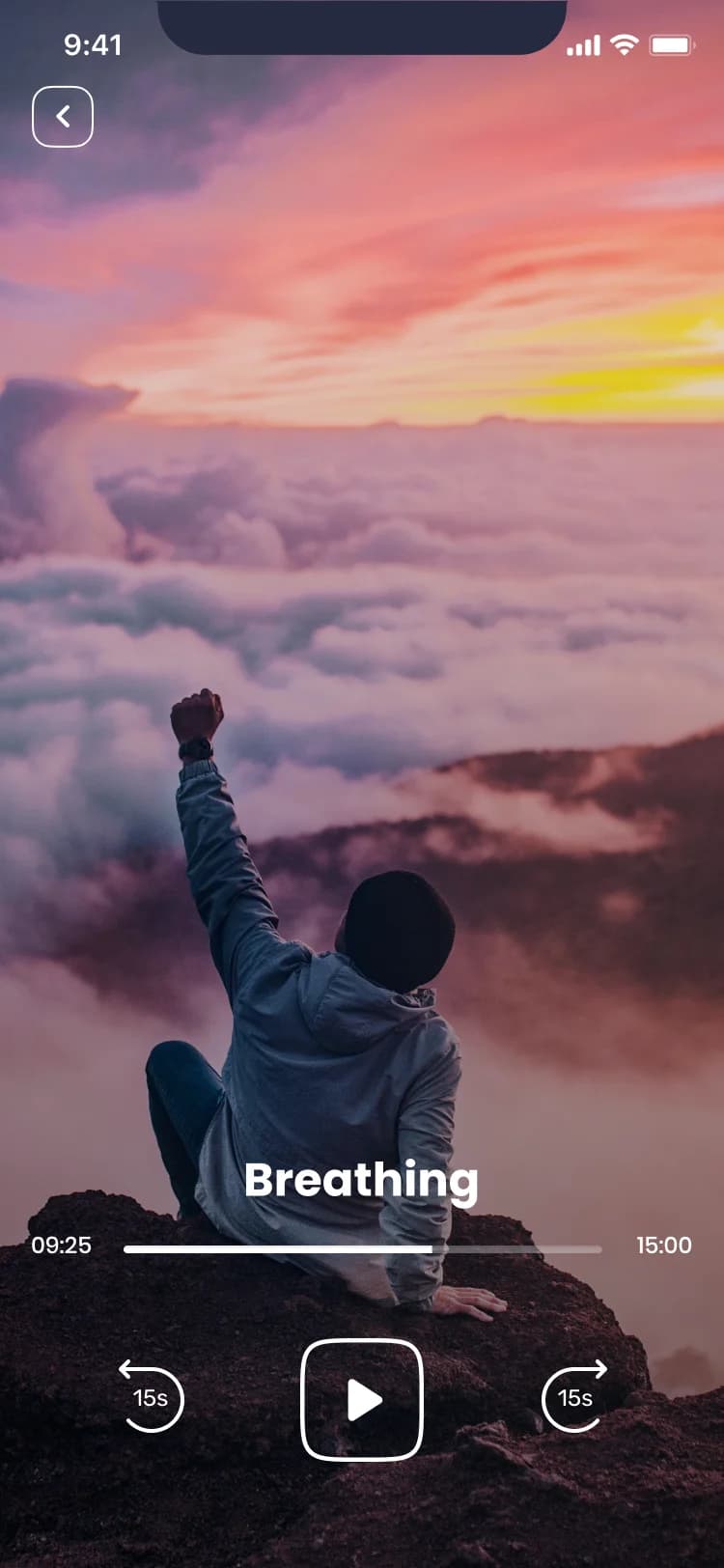
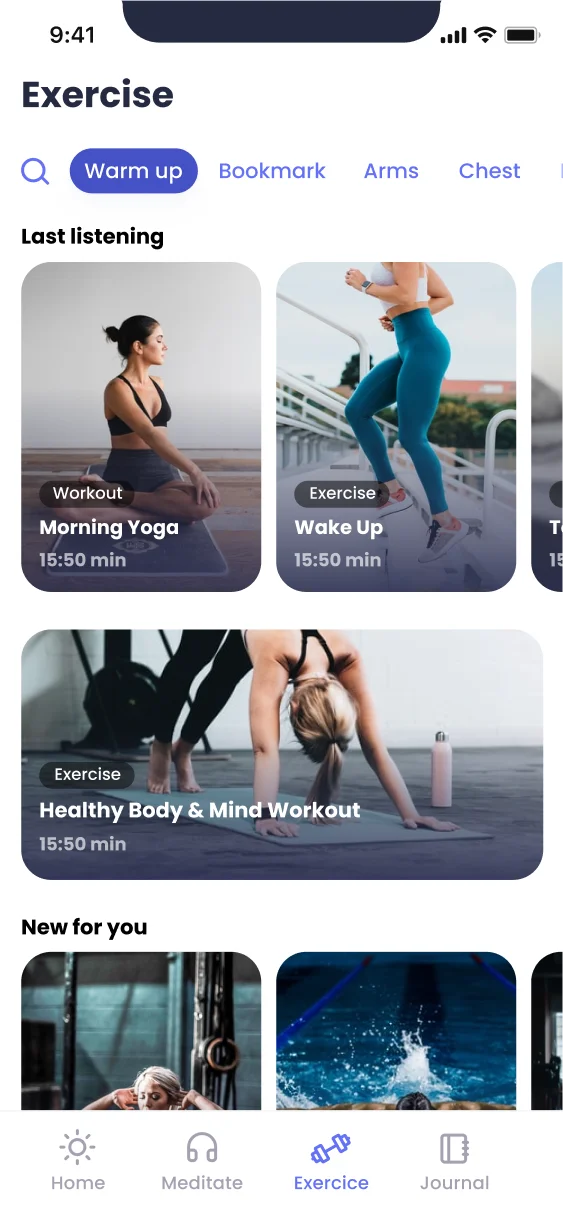
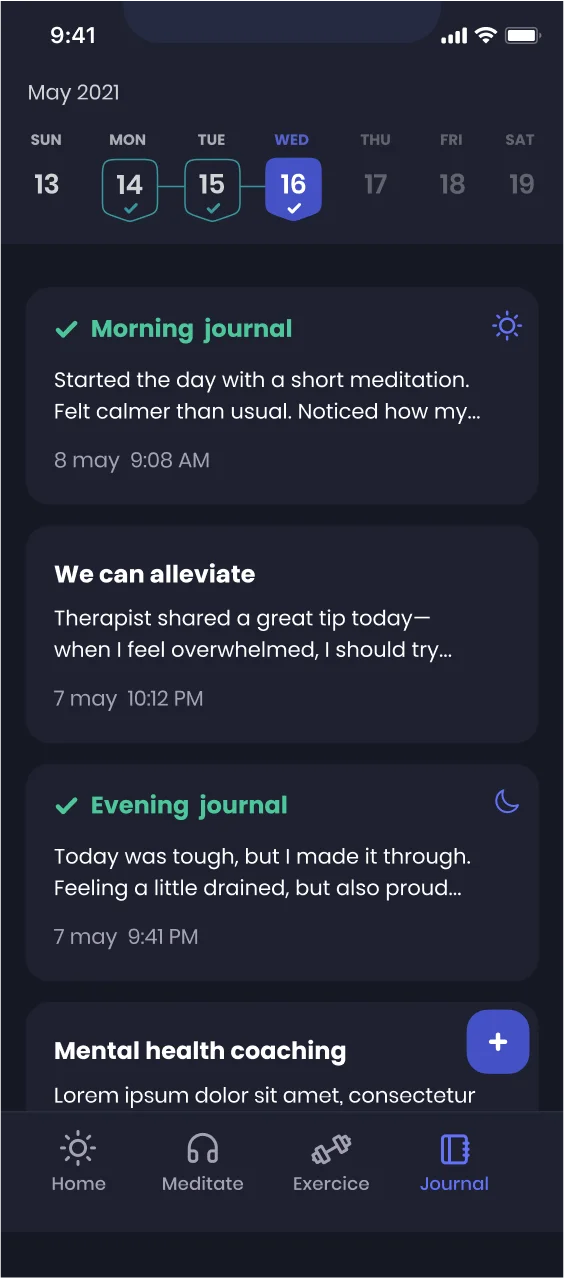
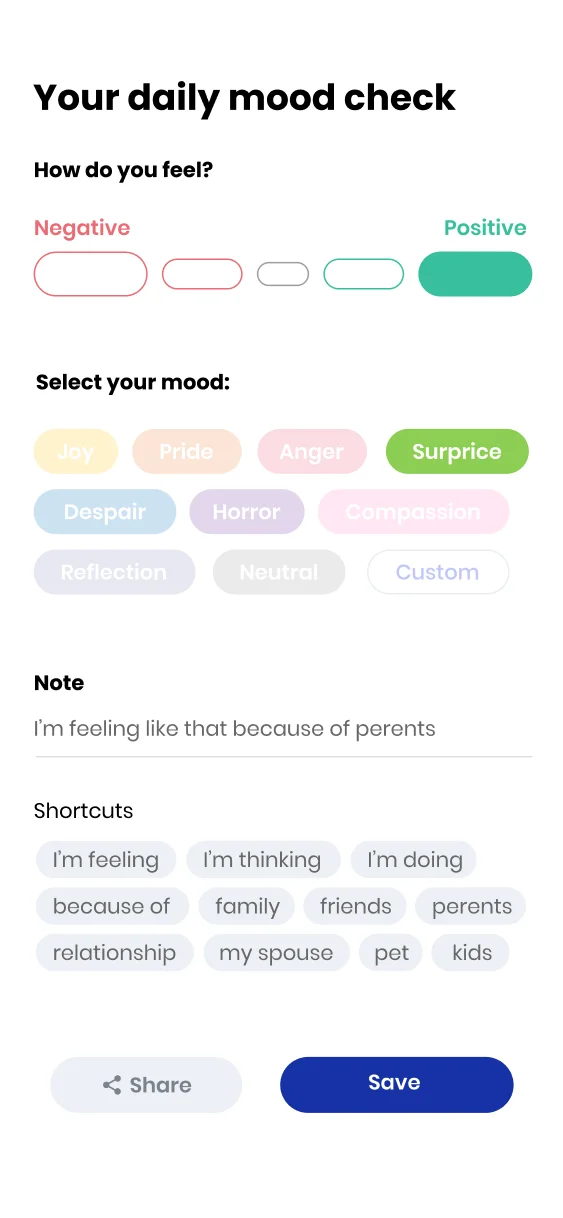
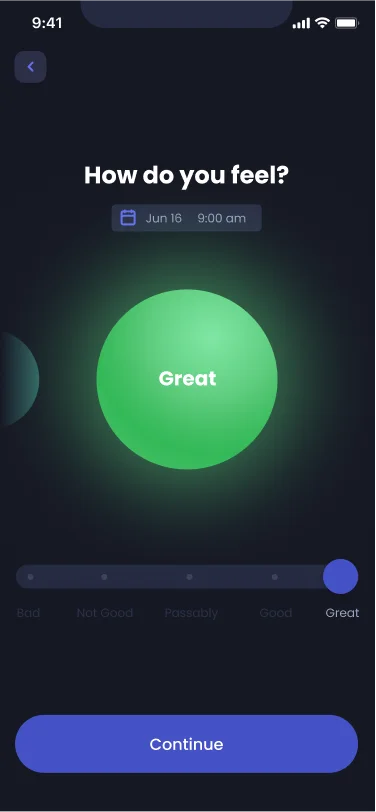
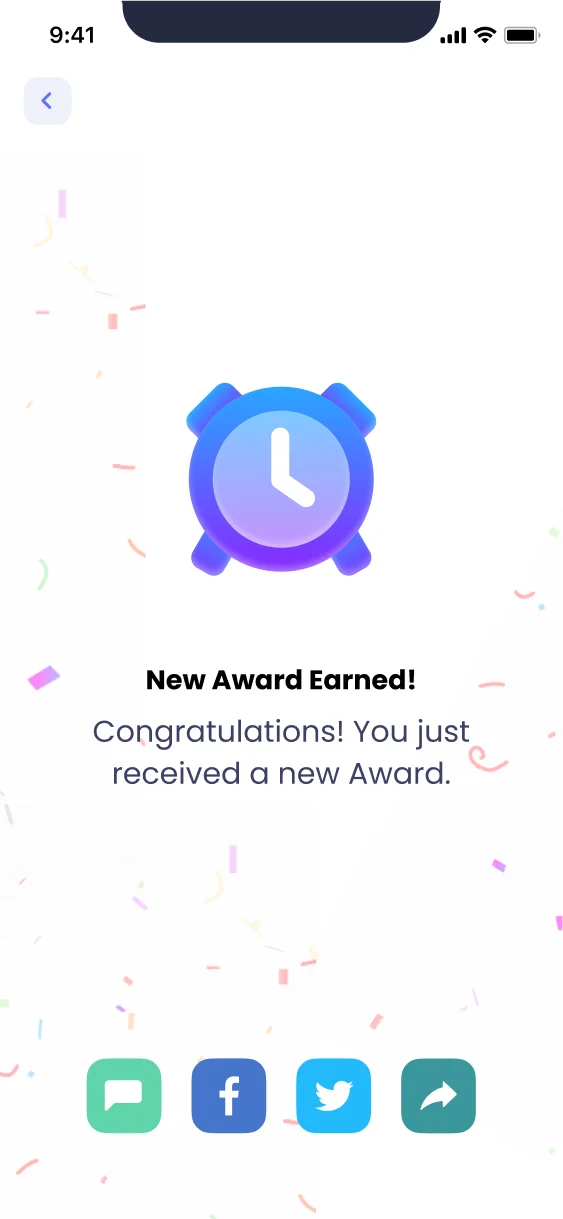
At first glance, the project lacked a clear strategy that balanced user needs and investor expectations. There were core features in mind—mood tracking, journaling, exercises, and meditation—but they needed a unique approach. The problems were clear (see image below for early design concepts):
- Mood tracking felt shallow – relying on emojis that didn't capture real emotional complexity.
- No way to track progress with therapists or relatives – making long-term support difficult.
- Low engagement risk – without incentives, users might drop off quickly.
- Lack of content management – no system for therapists to update or personalize exercises and courses.
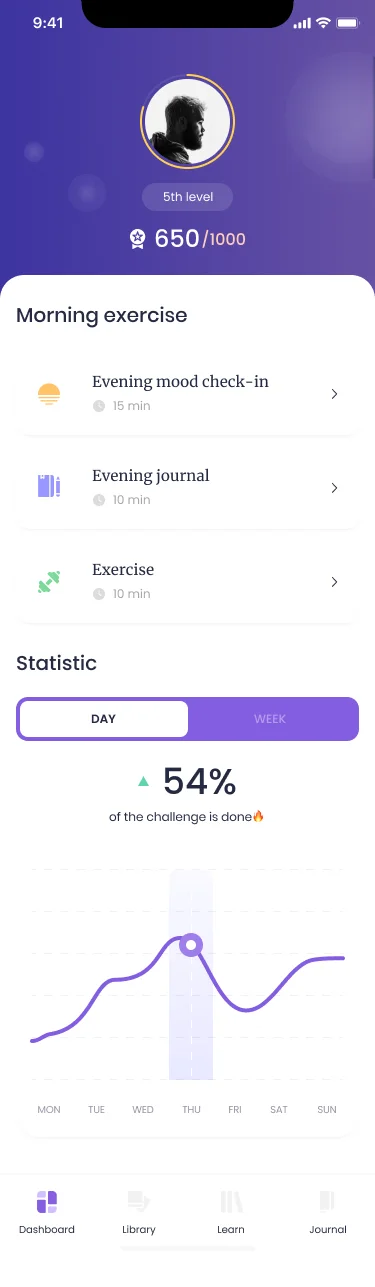
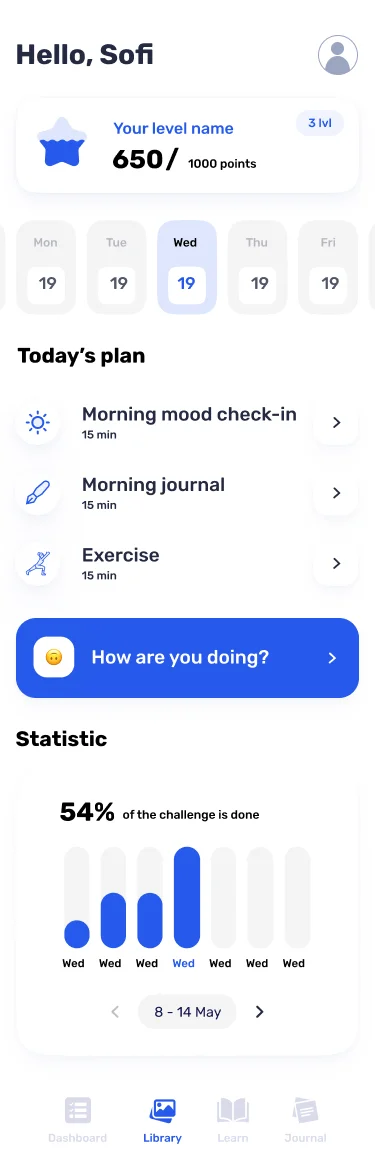
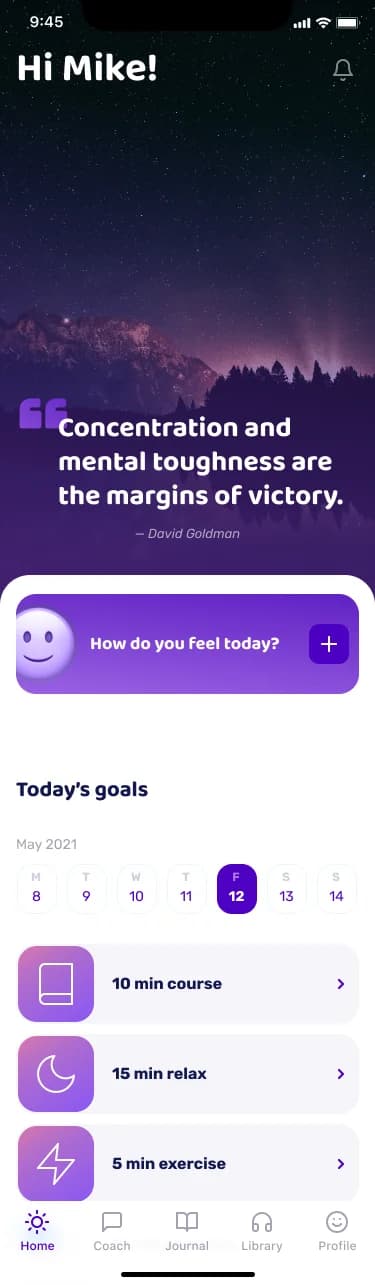
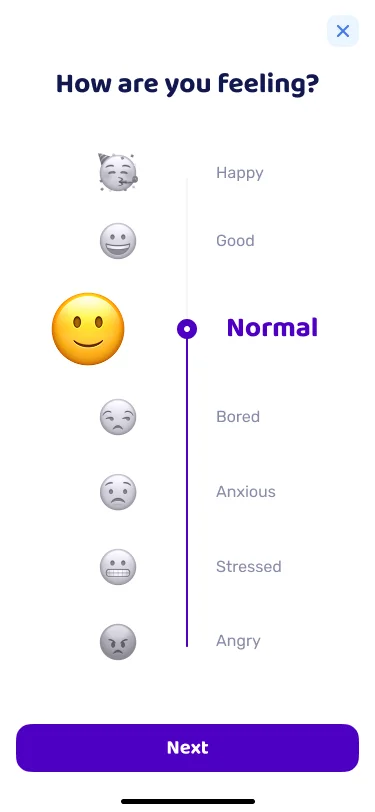
Early internal design concepts before my involvement.
Turning Research into Strategy
I started by diving into secondary research, looking for patterns in successful mental health apps. That's when I found a study in the PMC National Library of Medicine on mood-tracking apps. The key takeaway? People with medical conditions don't always associate "happiness" or "laughter" with positive well-being.
That insight led to a completely new mood-tracking structure:
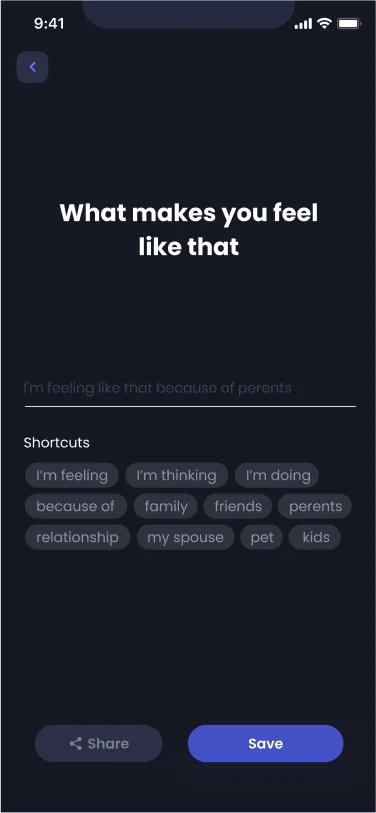
Traditional emoji-based systems were misleading for users with serious mental health conditions. Instead, I structured the mood tracking feature into three steps:
- Step 1: How do you feel? (Positive or Negative)
- Step 2: What specific emotions are you experiencing? (Colorful tags for clarity)
- Step 3: Any additional thoughts or notes? (Optional journaling)
This eliminated emojis and created a more clinically relevant system.
I proposed two versions—one optimized for speed (single-page) and another for reduced cognitive load (multi-step)—for internal user testing. Due to capacity constraints, I couldn't conduct the tests myself, but I provided insights on what to evaluate to ensure the best user experience.
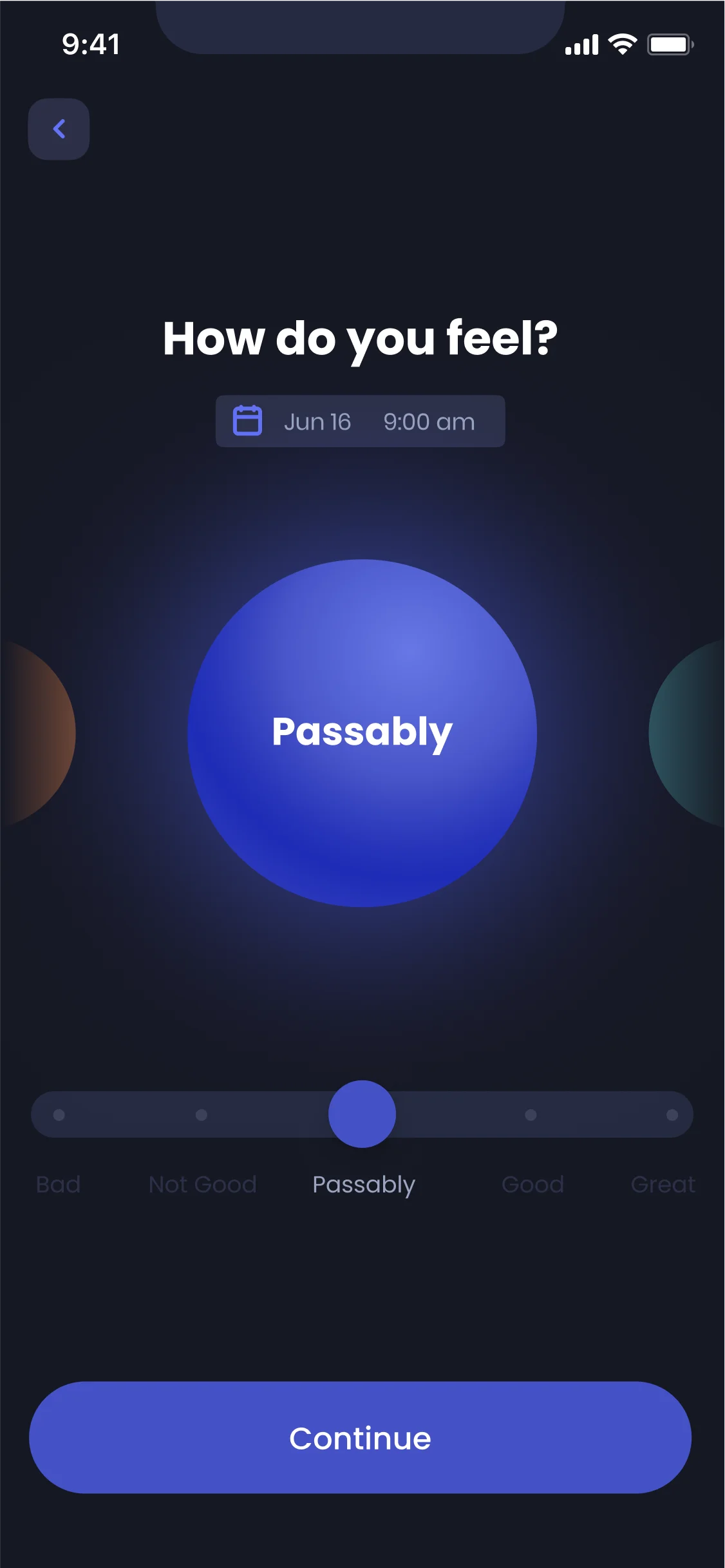
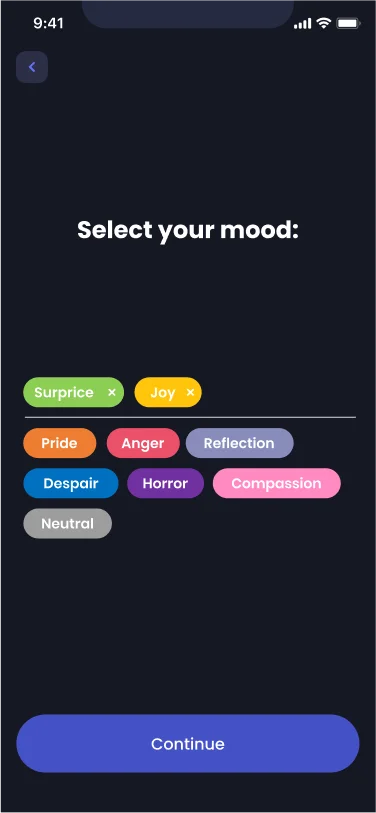
We have the data—now what?
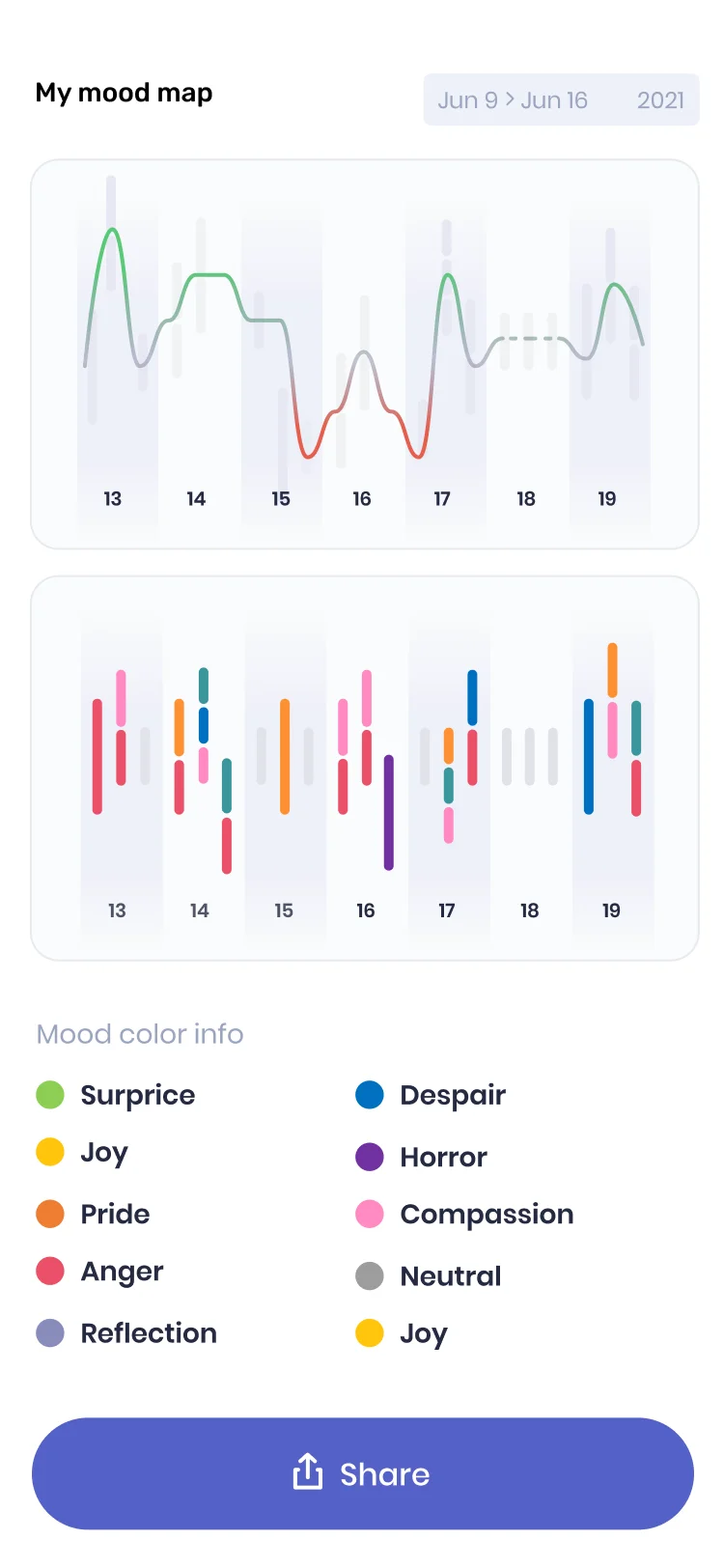
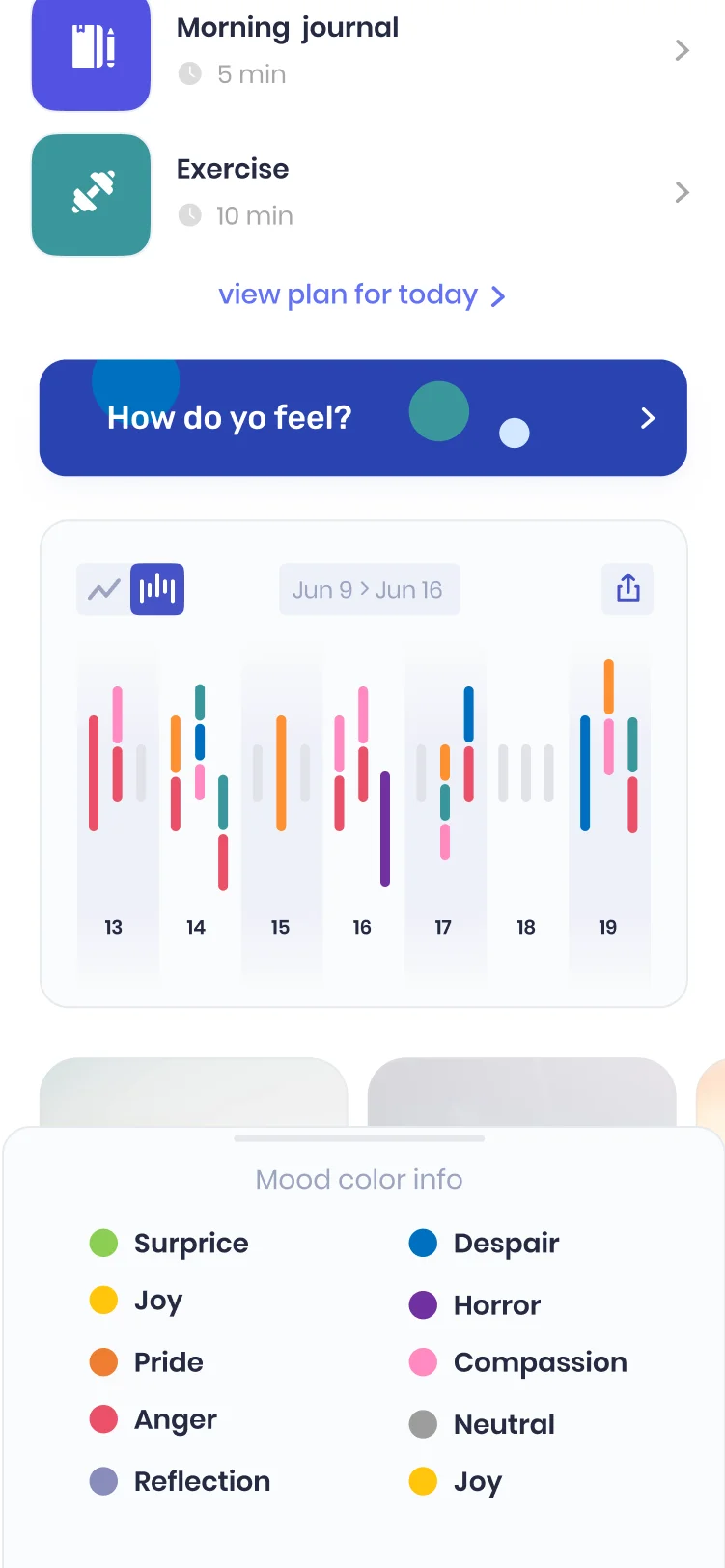
Collecting mood data is one thing, but making it meaningful and actionable is another. I explored different data visualization techniques, combining best practices to design a system that helps users understand, reflect, and share their emotional journey.
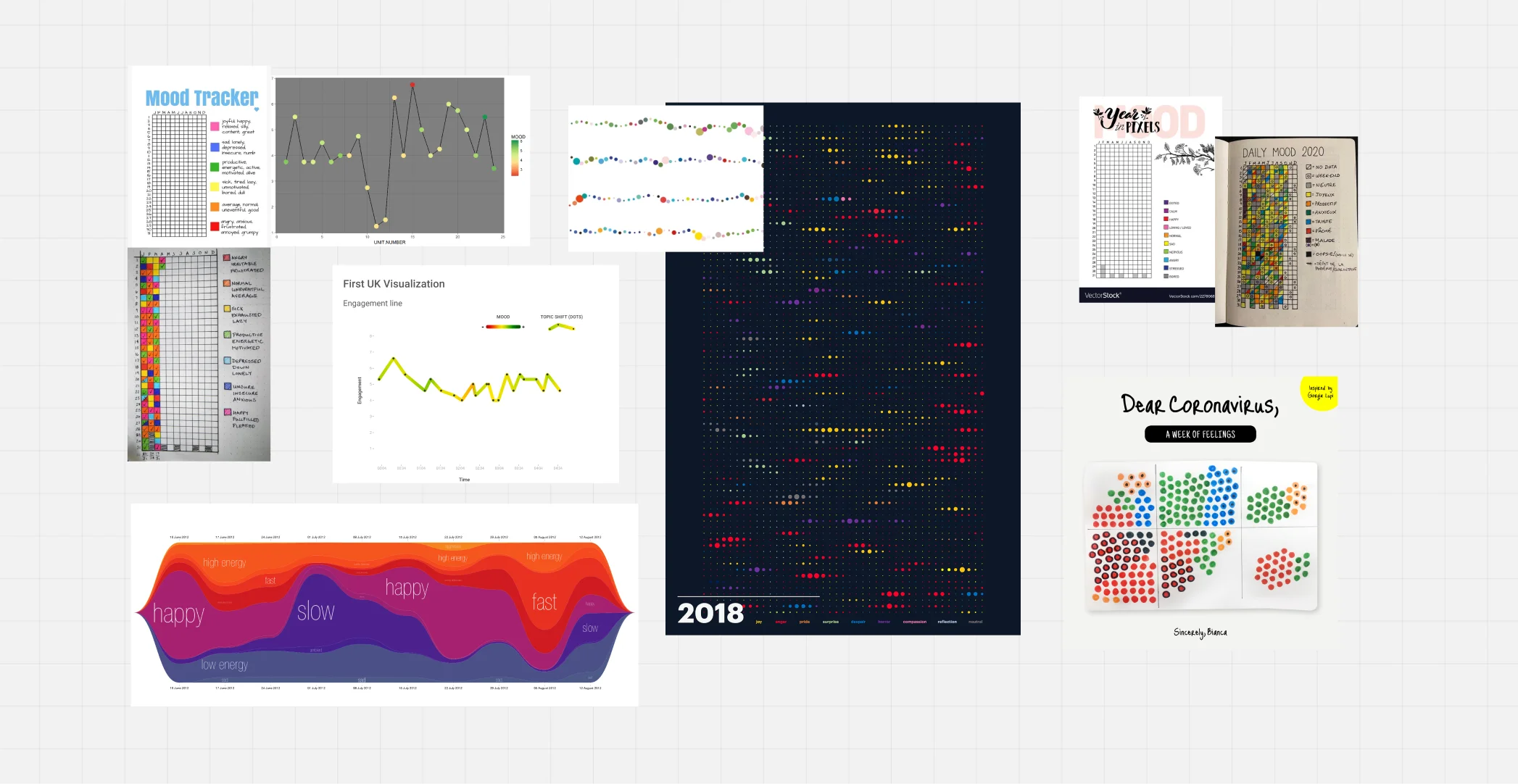
Exploring various data visualization techniques from different domains for inspiration
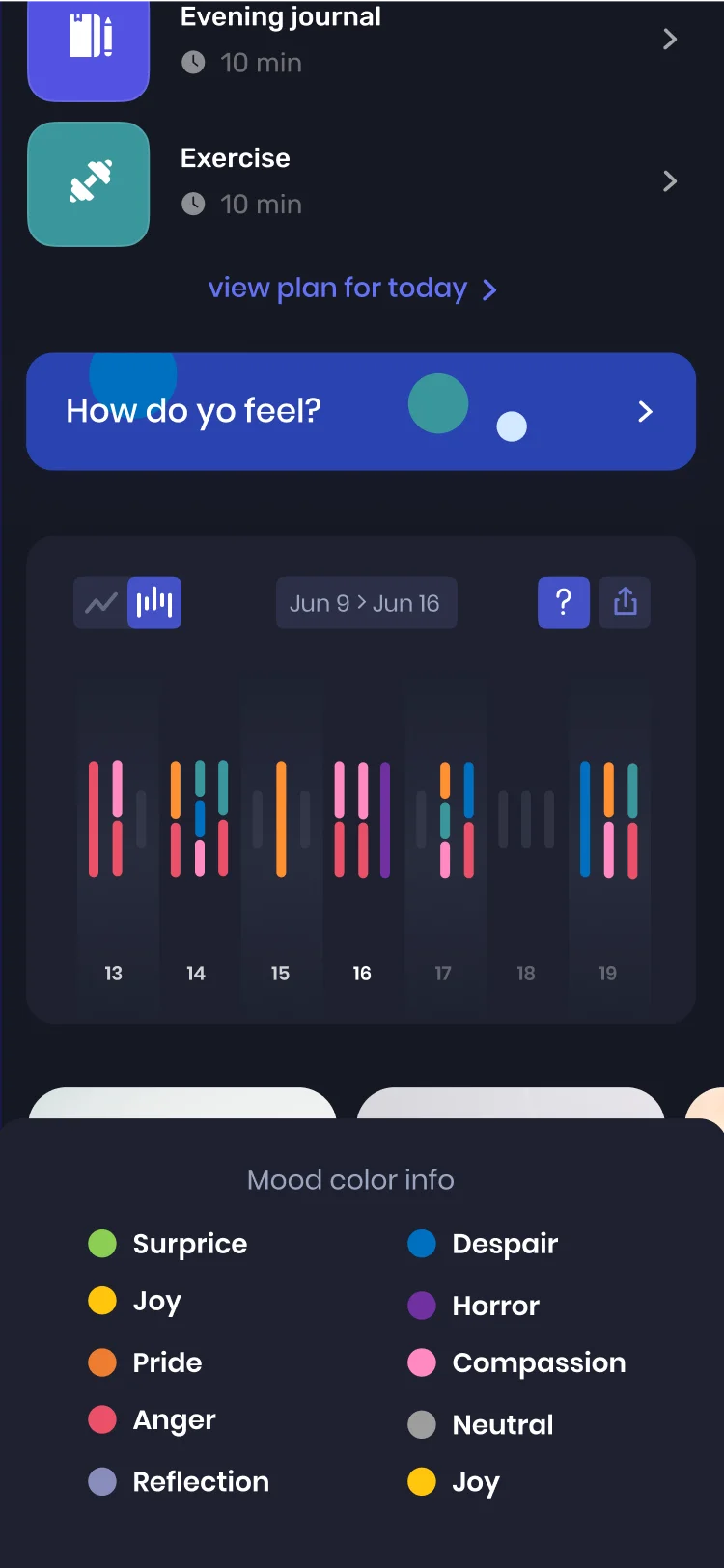
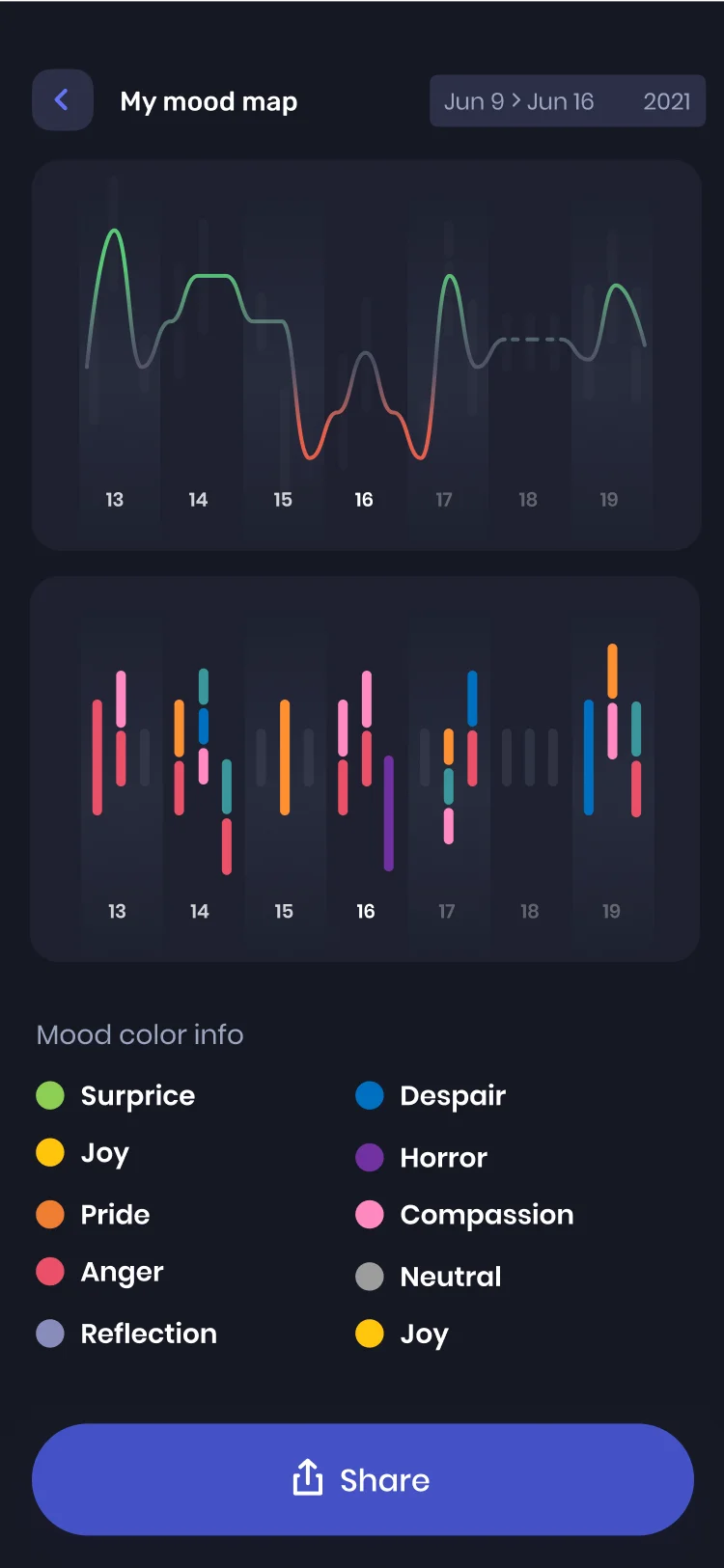
- Seeing the bigger picture – Instead of isolated mood entries, users can track patterns over time, making emotional trends more visible.
- Encouraging self-reflection – Interactive charts allow users to compare their progress, helping them connect moods with life events.
- Easy to share & discuss – Designed with therapists and relatives in mind, the visuals provide quick, insightful summaries of emotional well-being.
By transforming raw data into intuitive, shareable insights, the app empowers users to see not just how they feel, but why.
Making it more than just another mental health app
Progress Sharing for Support
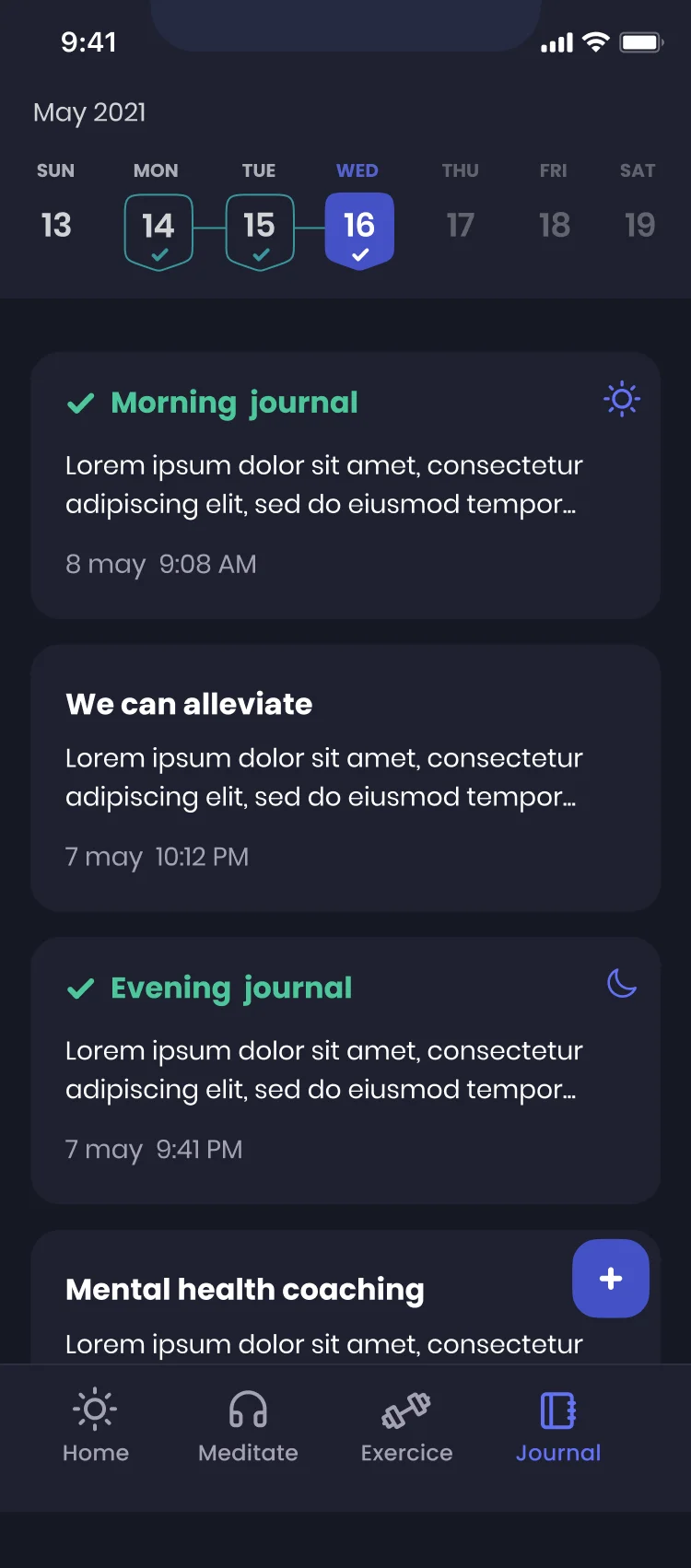
Users needed a way to show their progress to therapists and relatives. I integrated a secure share feature for both mood tracking and journaling, making long-term support easier.
Gamification for Engagement
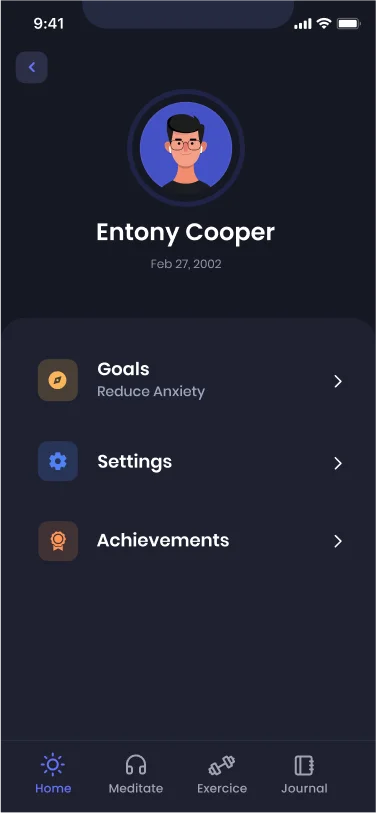
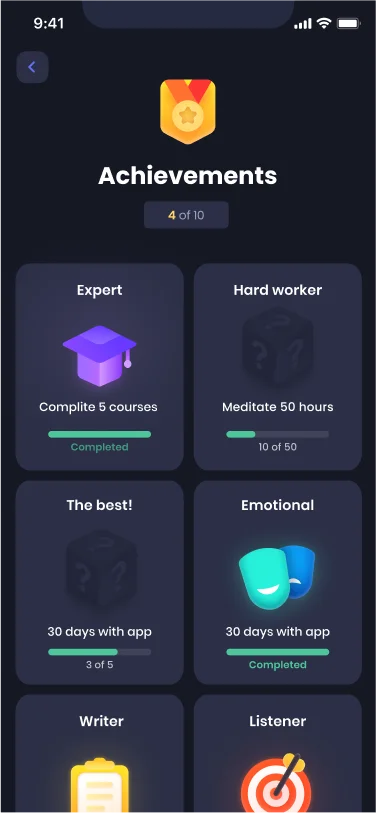
To keep users engaged, I introduced streaks and achievements:
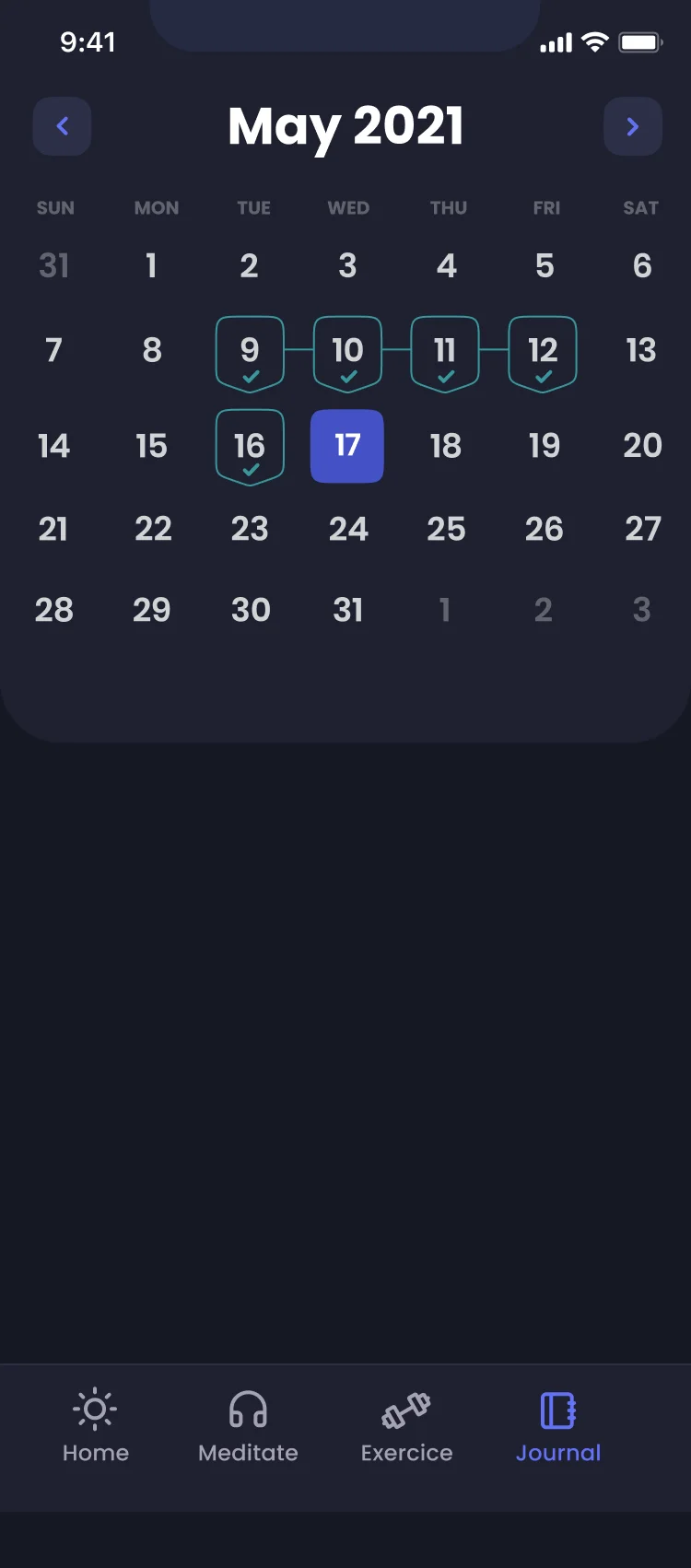
- Track moods daily? Keep a streak.
- Complete multiple courses? Unlock an achievement.
- Stay consistent for 14 days? Get rewarded.

Admin Panel for Growth
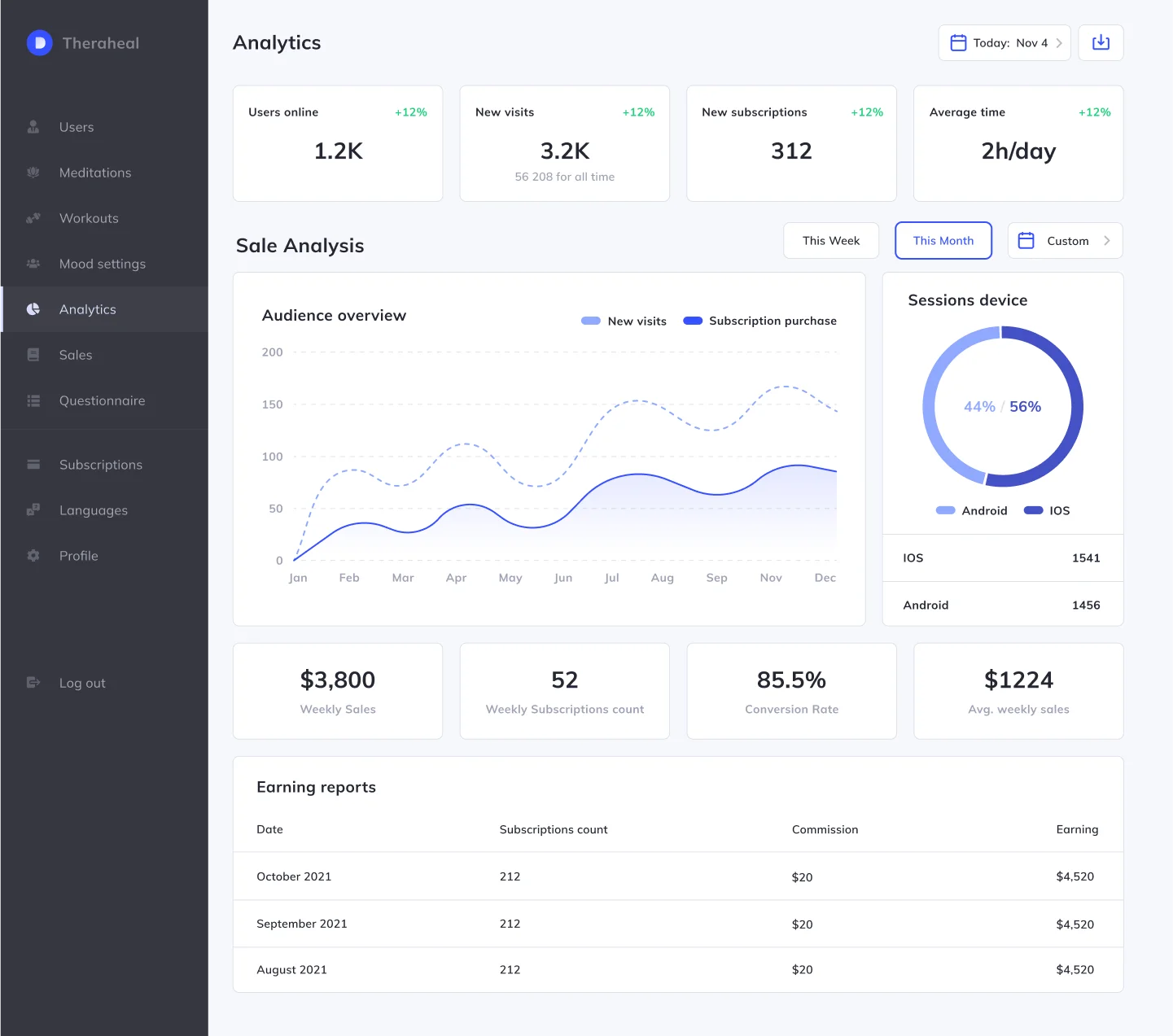
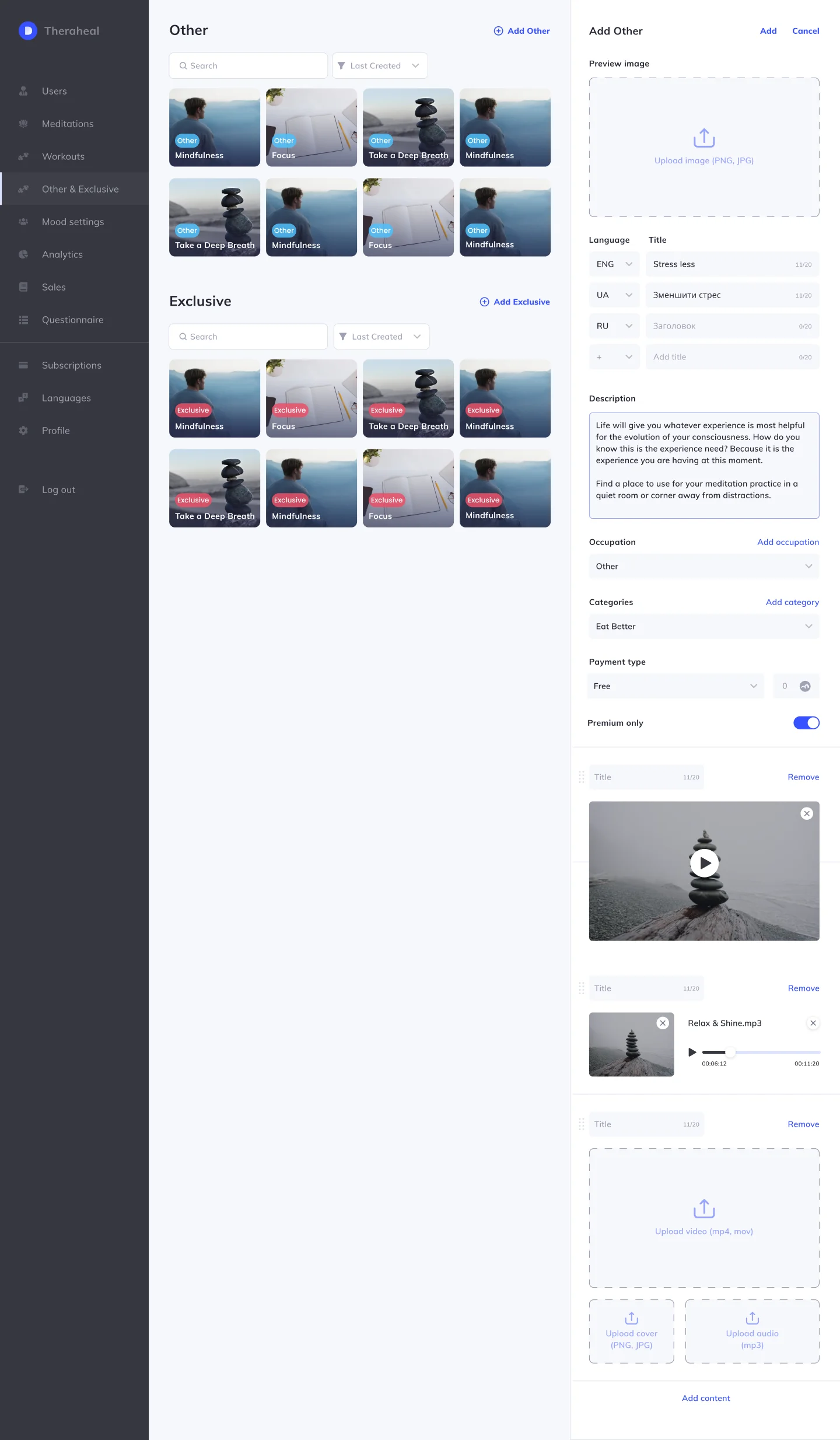
To make the app scalable, I designed a backend system for therapists and admins to upload, structure, and manage courses, exercises, and meditations—allowing continuous content updates.
Closing the Gaps: From Design to Development
A great design isn't enough if the development team can't bring it to life. We made sure that:
- All edge cases were covered – including low internet scenarios and error handling.
- Fully interactive prototypes were created – showcasing main user flows and micro-interactions.
- The product was development-ready – all design and technical gaps were closed for a smooth handoff.
Final Handoff & Investor Pitch
Once the product was fully defined, I worked with the internal team to ensure a seamless transition:
- Handoff meeting – aligning them with research, design rationale, and technical considerations.
- Documented design decisions – ensuring future development stayed true to the original vision.
- Investor pitch & product showcase video – crafting a compelling presentation for stakeholders.
The Outcome
- A research-backed mood-tracking system with a clinical approach.
- Seamless therapist support integration through progress-sharing features.
- Gamification mechanics that encourage user consistency.
- An admin panel for structured content management and scalability.
- A polished investor presentation that strengthened the product's market positioning.
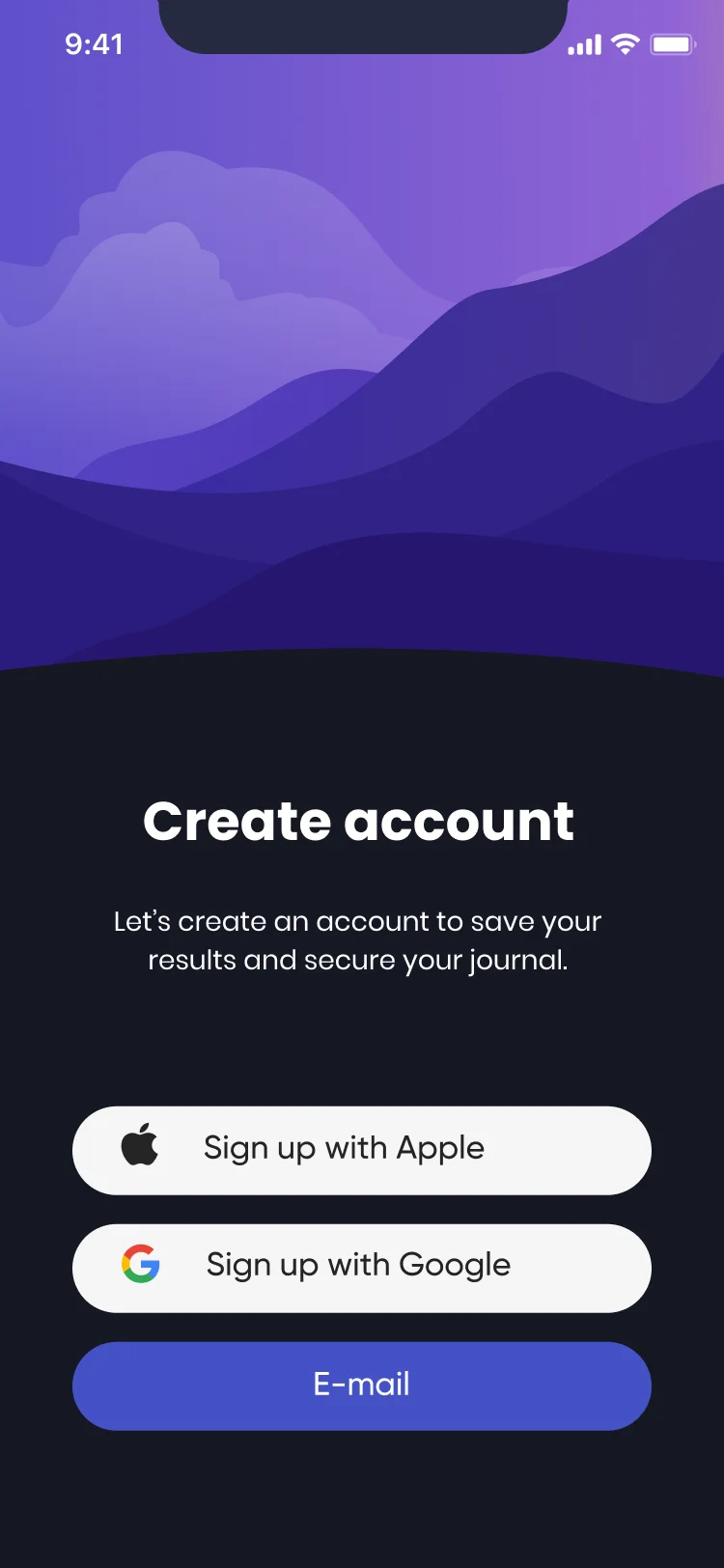
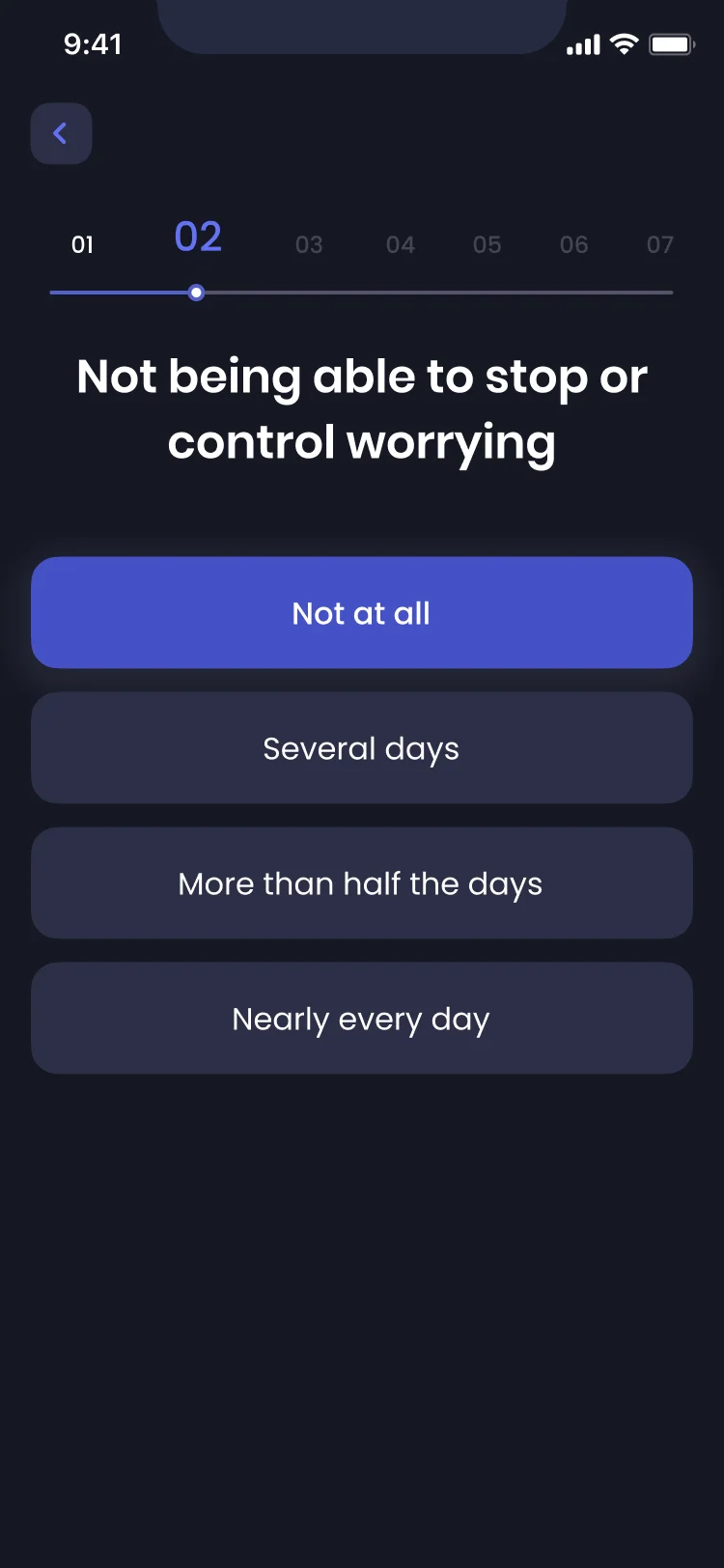
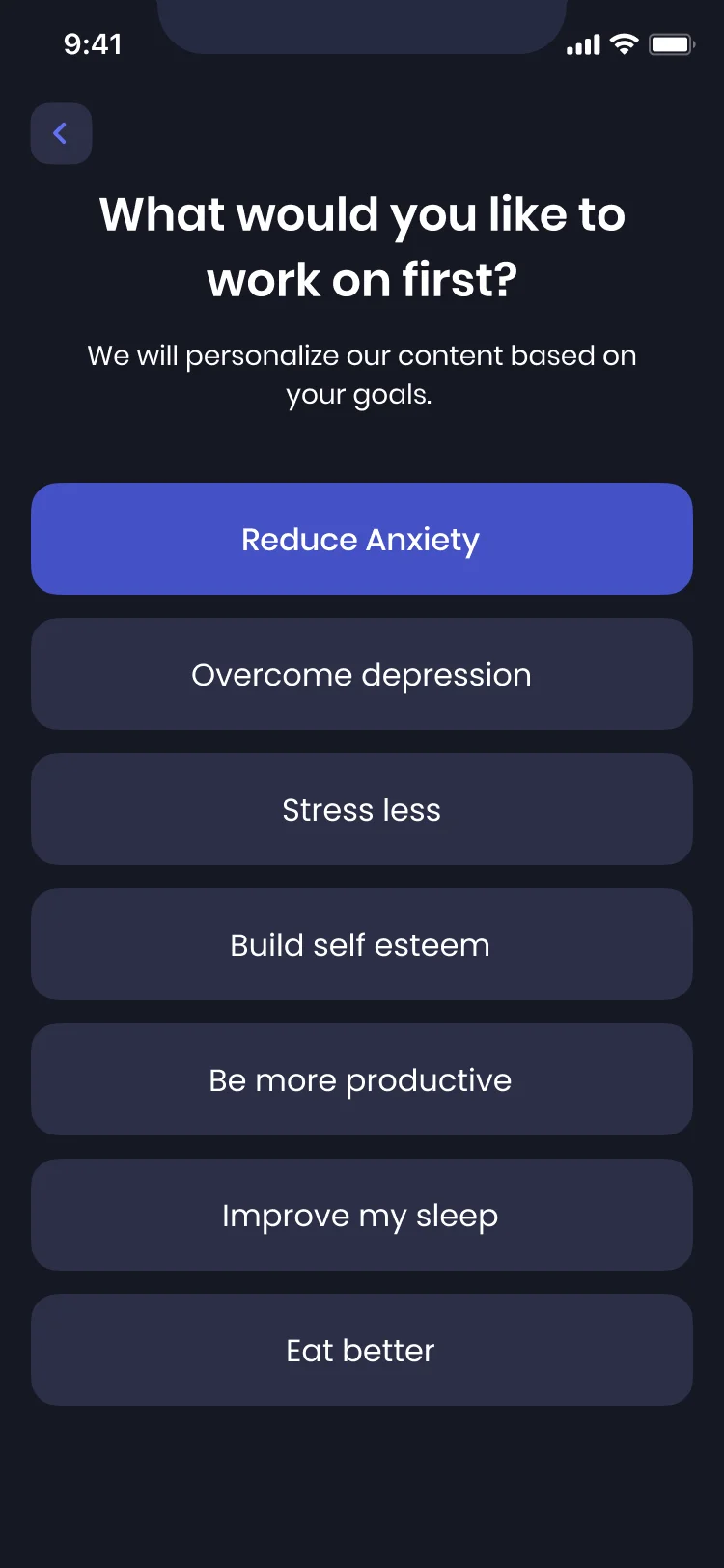
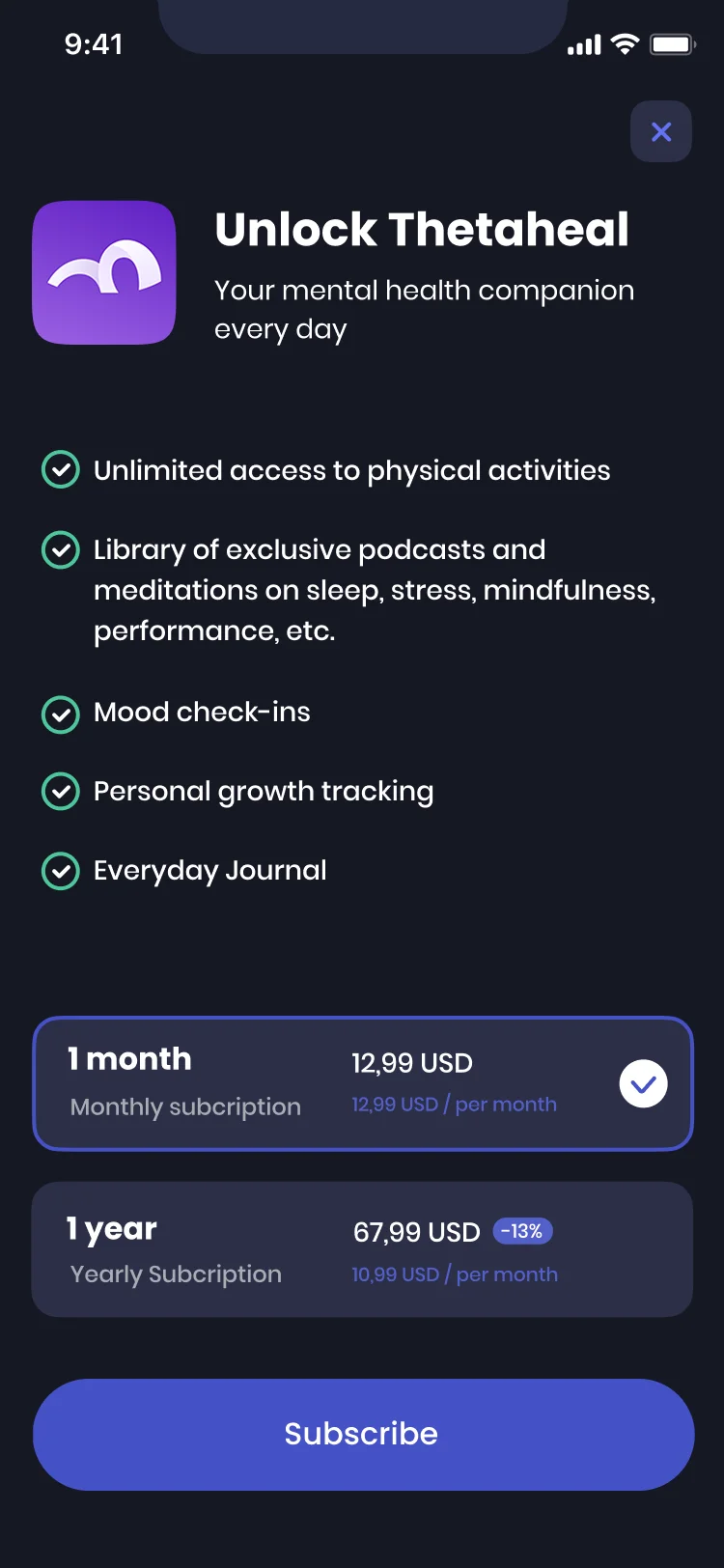
Registration flow
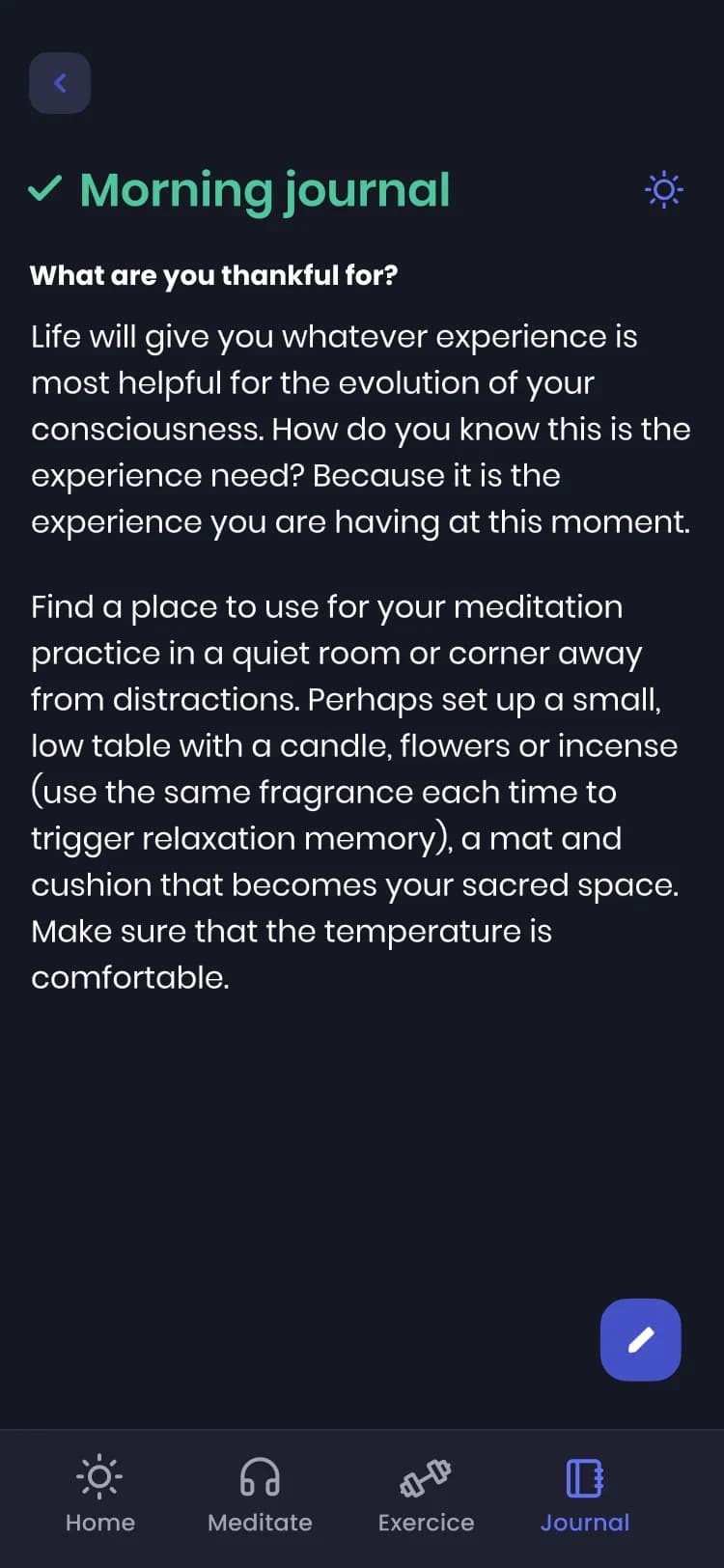
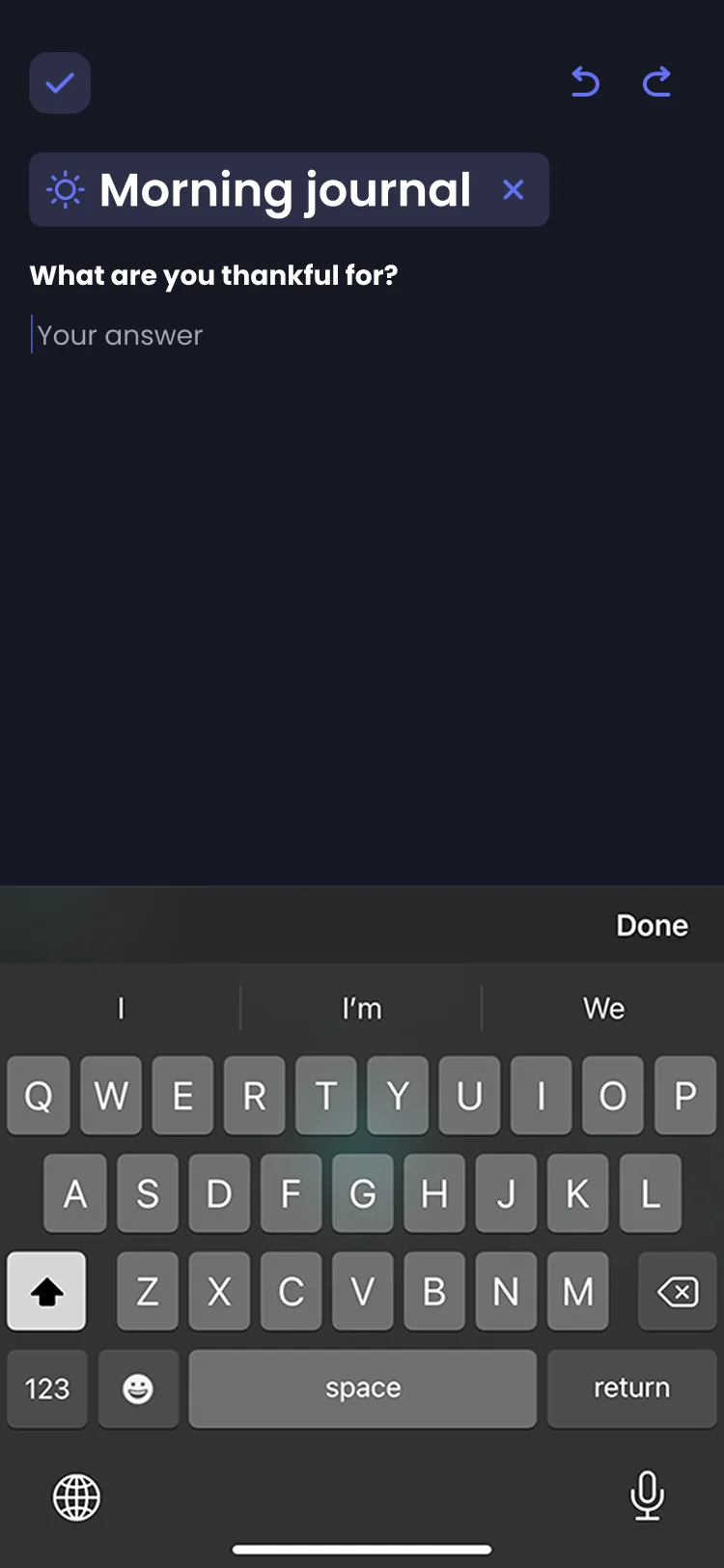
Journaling
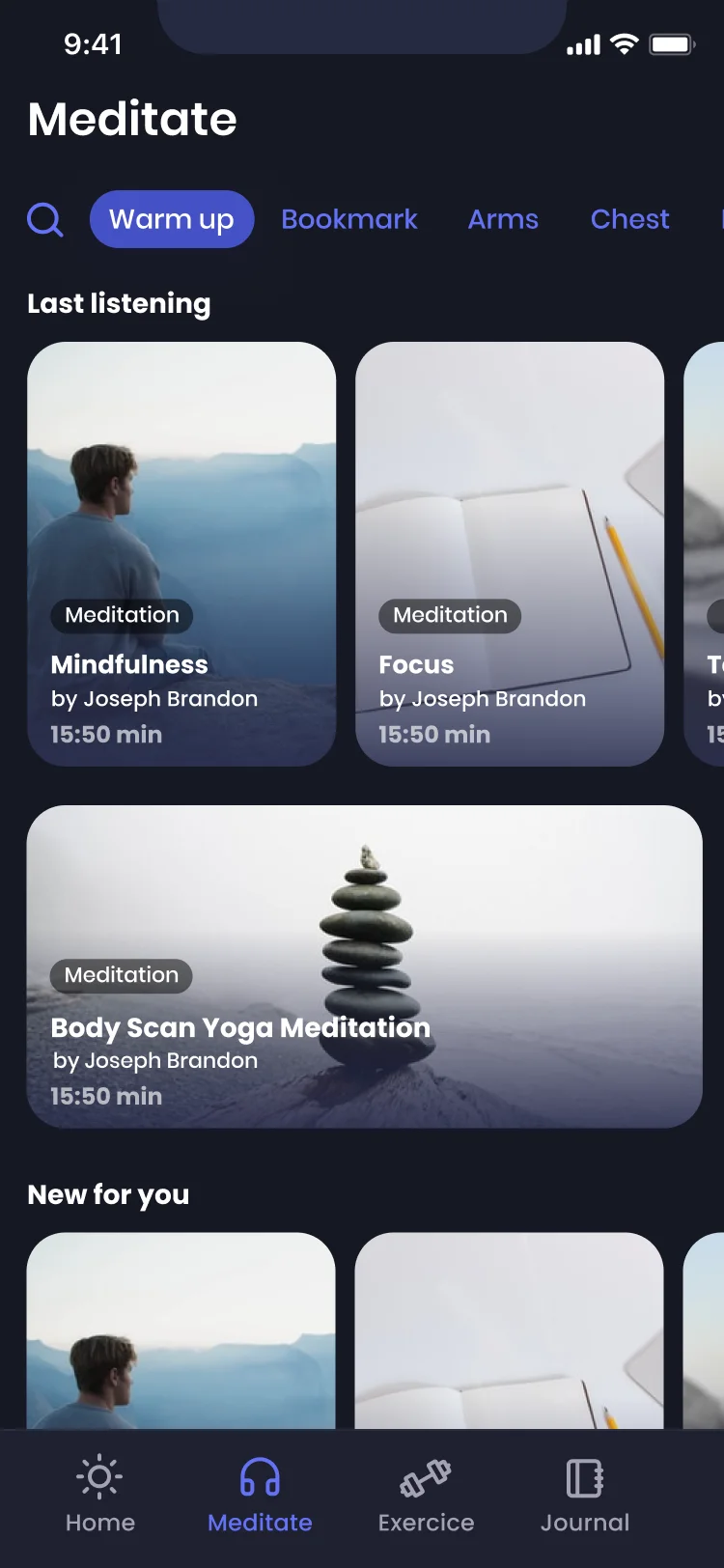
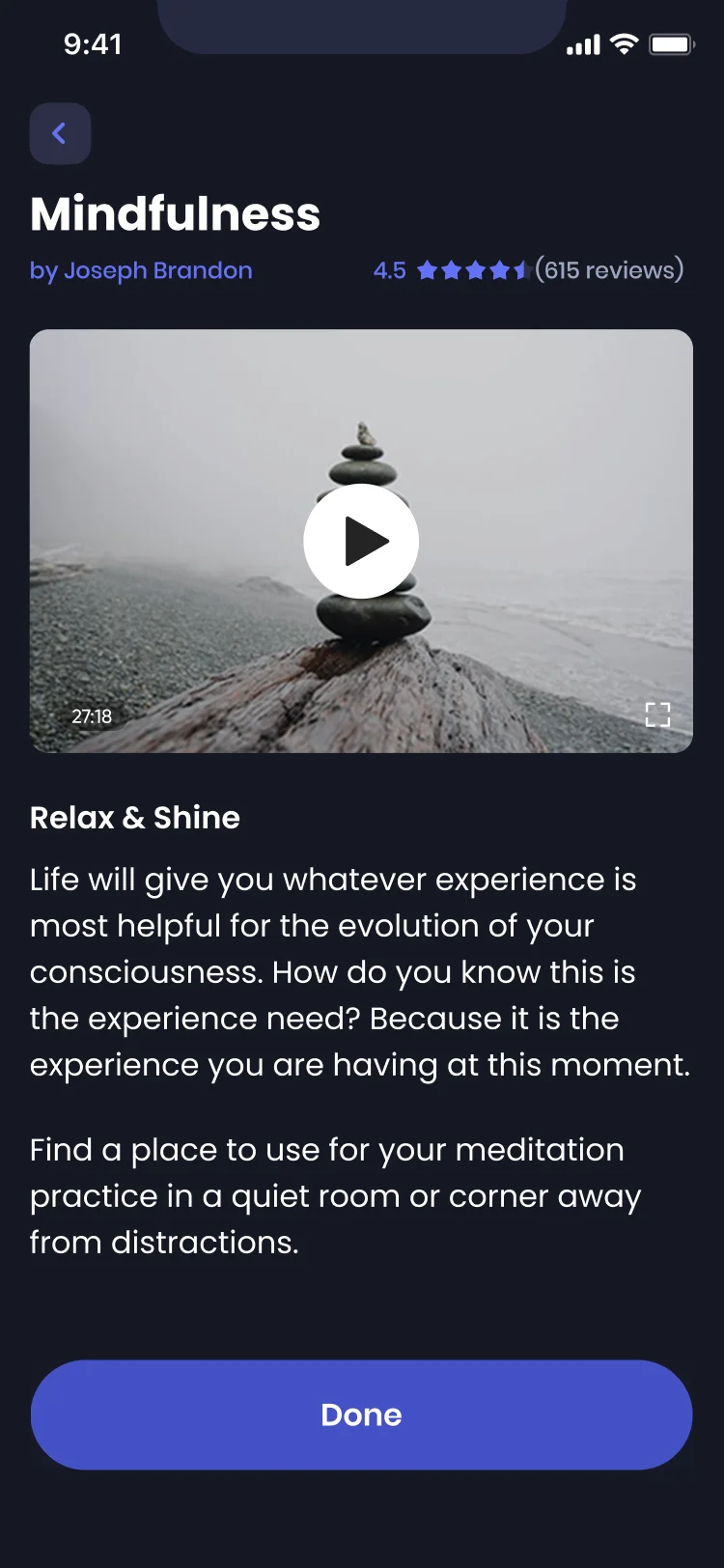
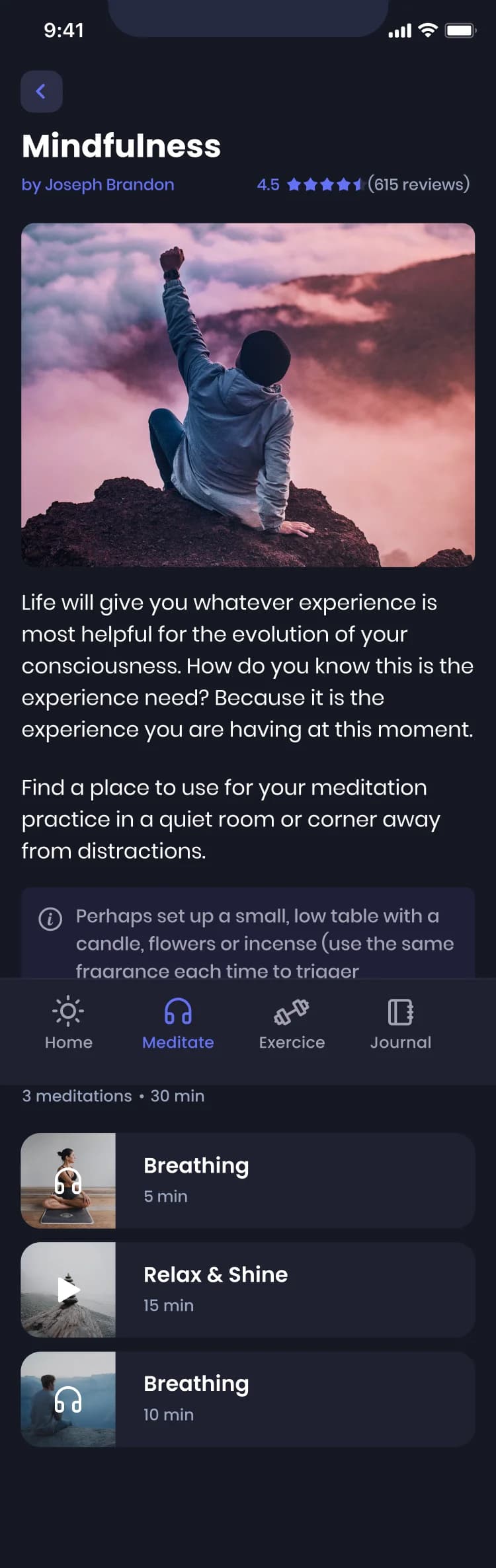
Meditate
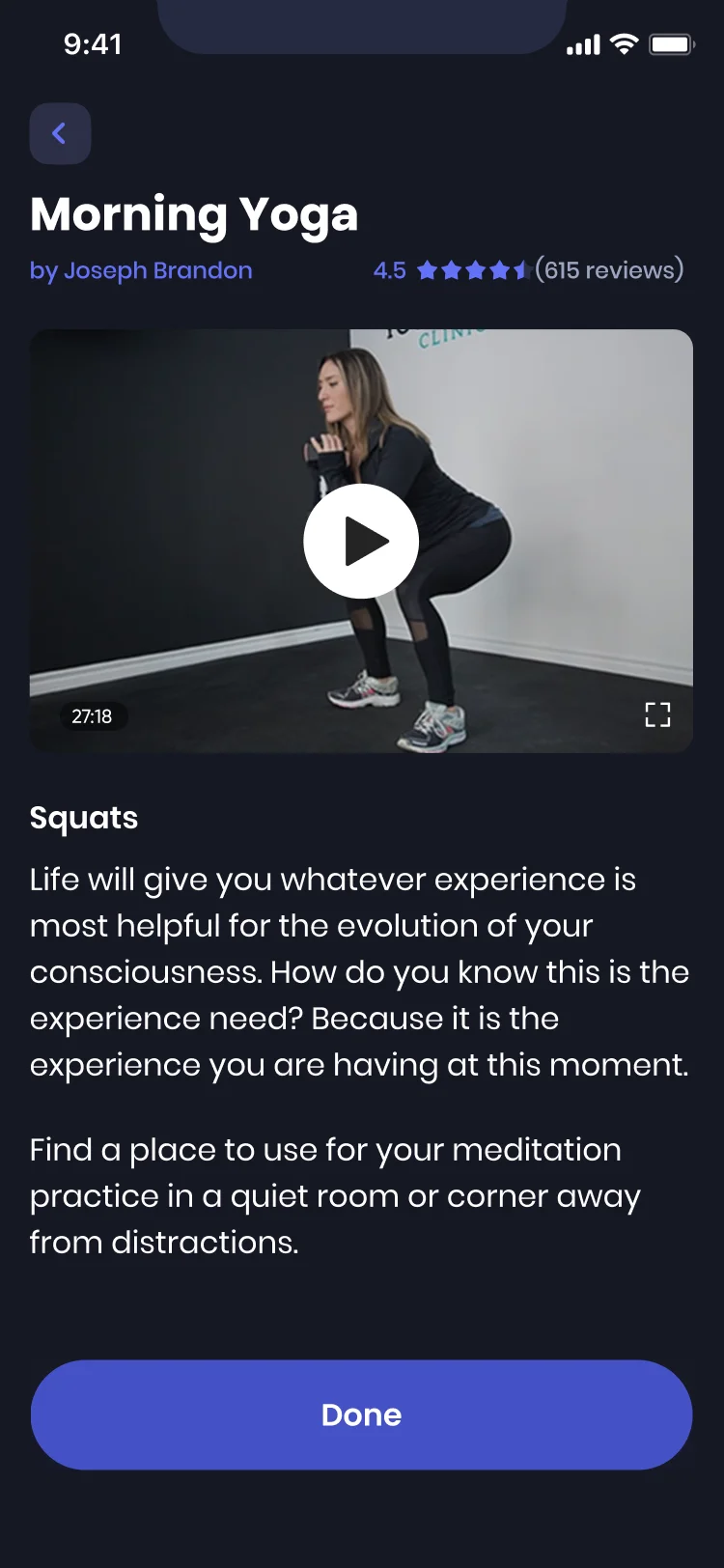
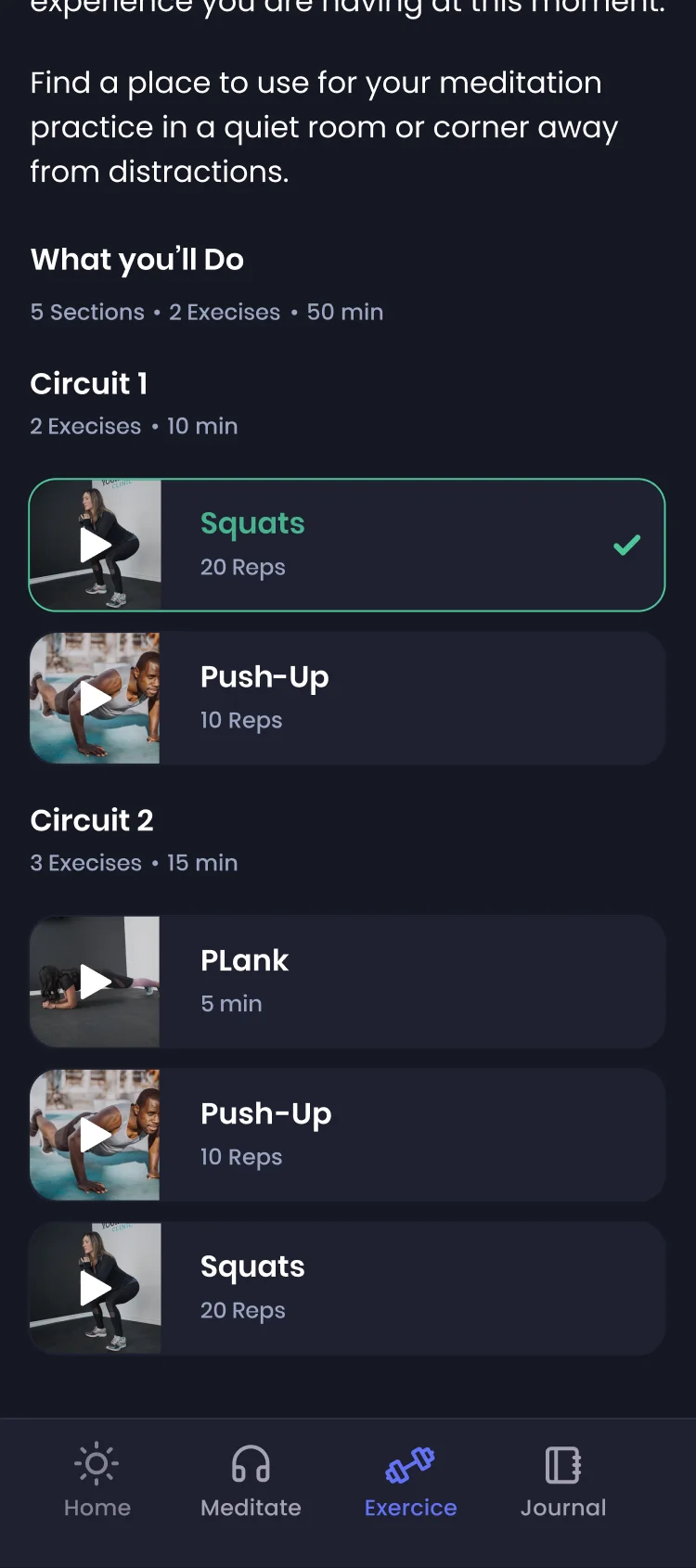
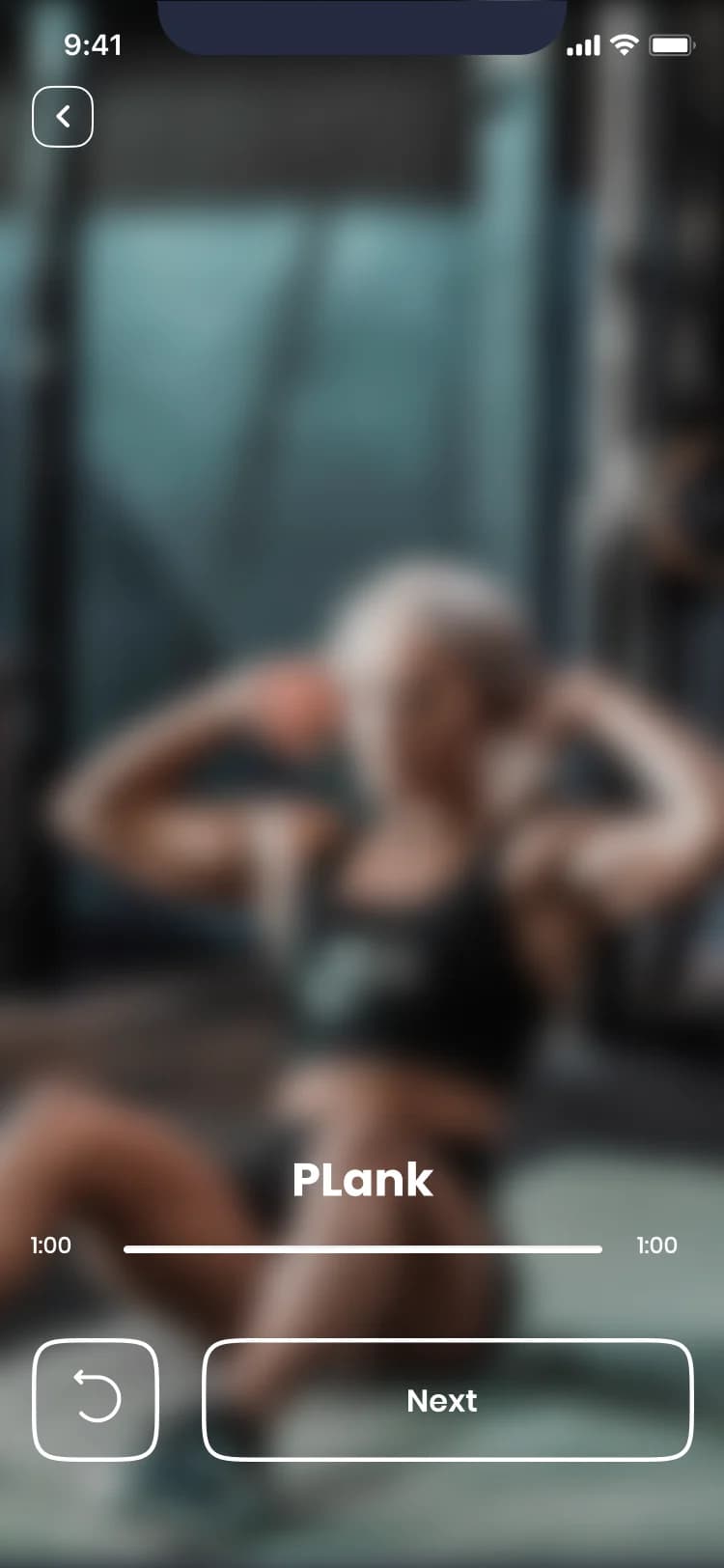
Exercise
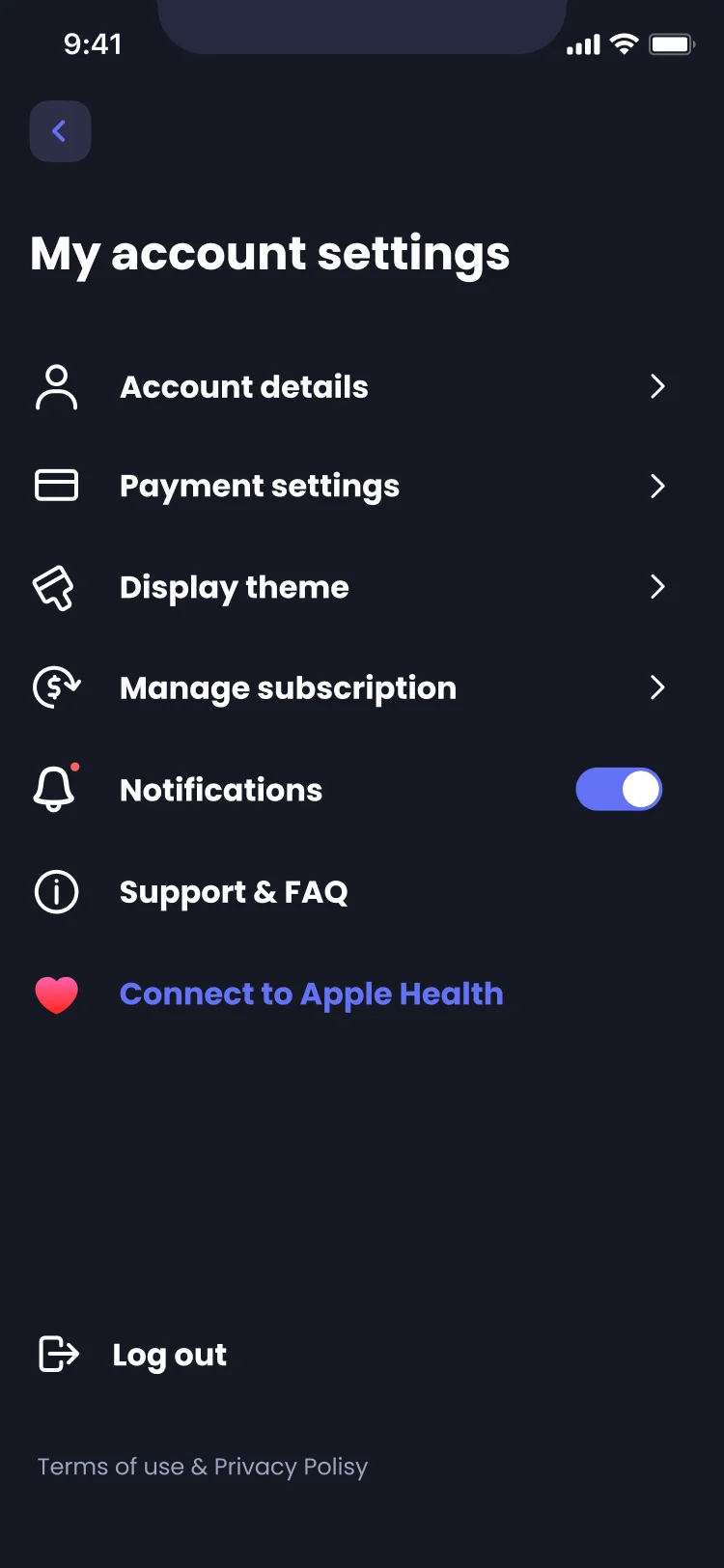
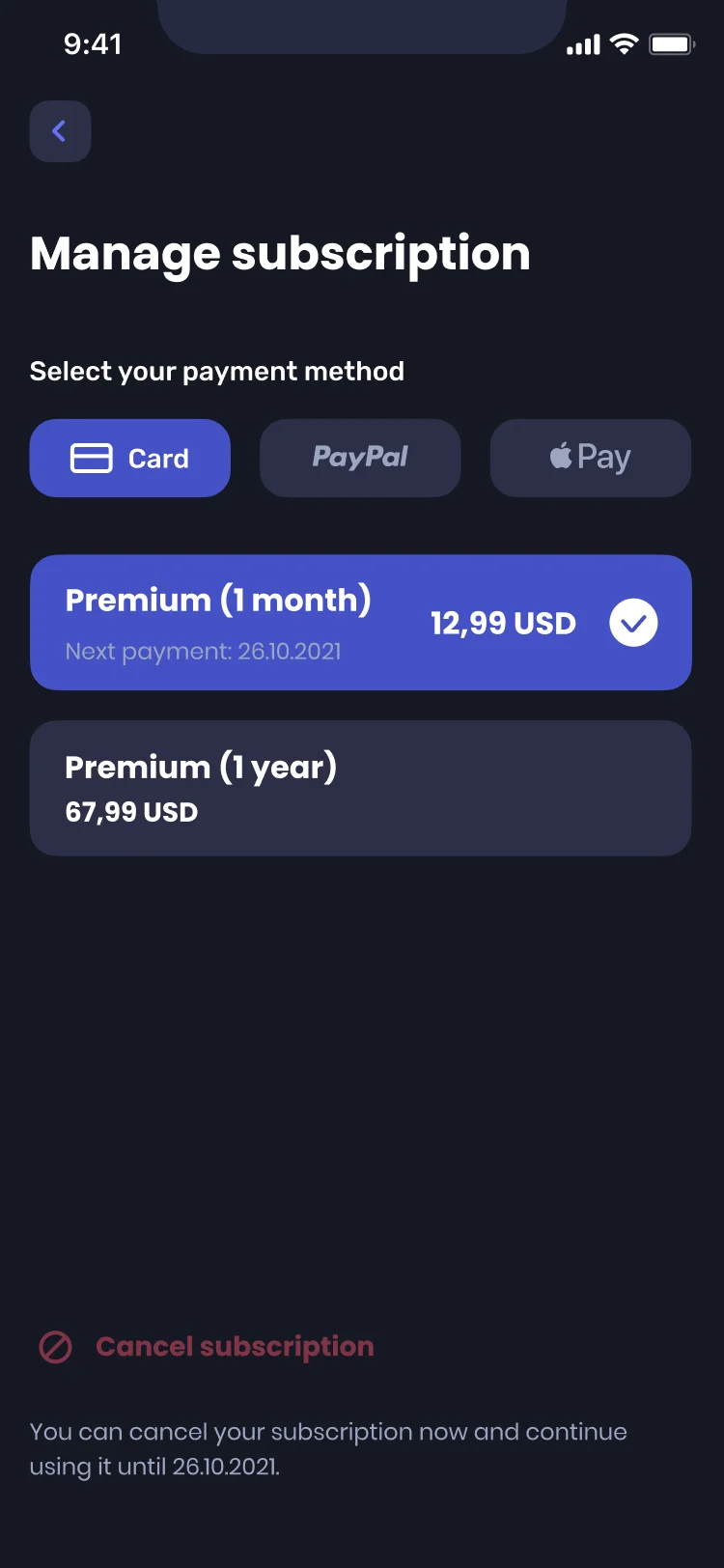
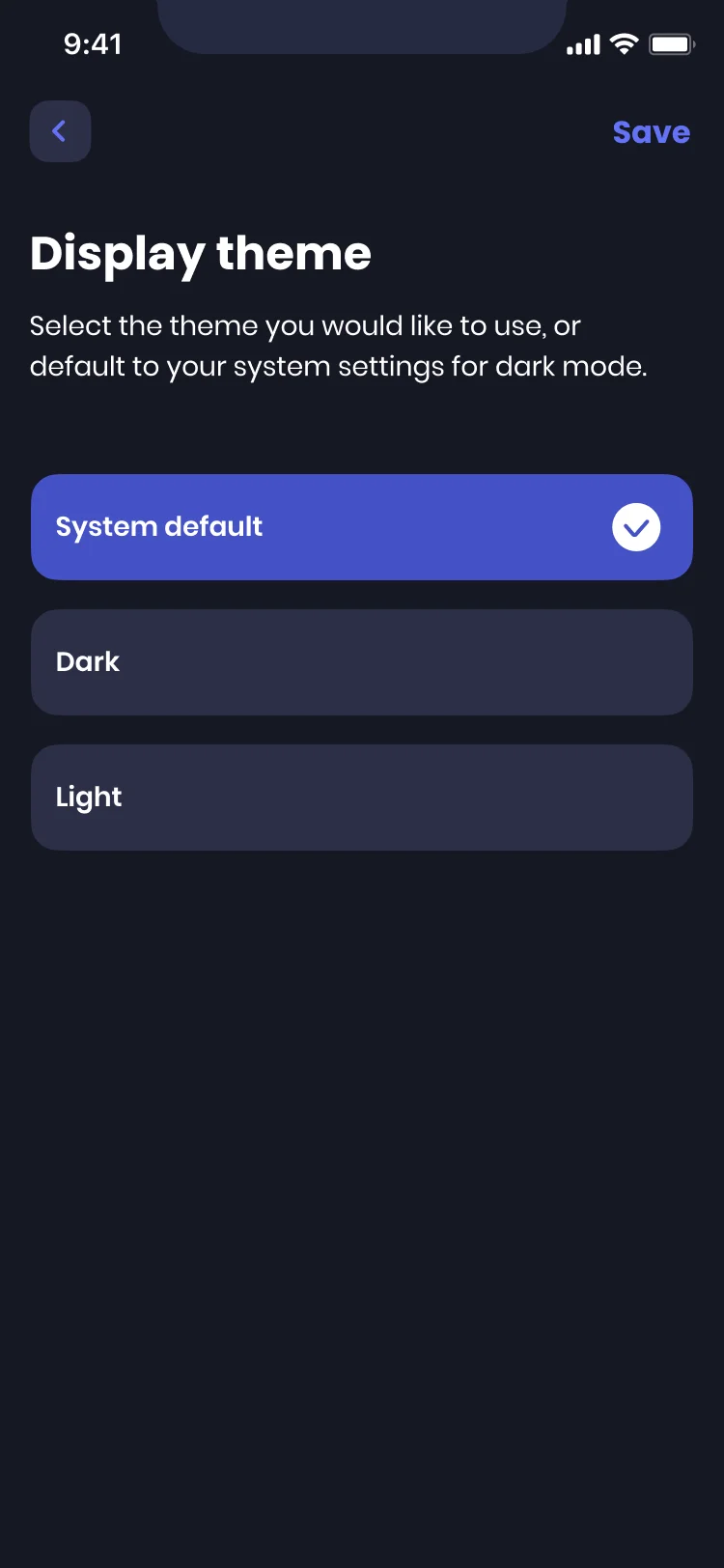
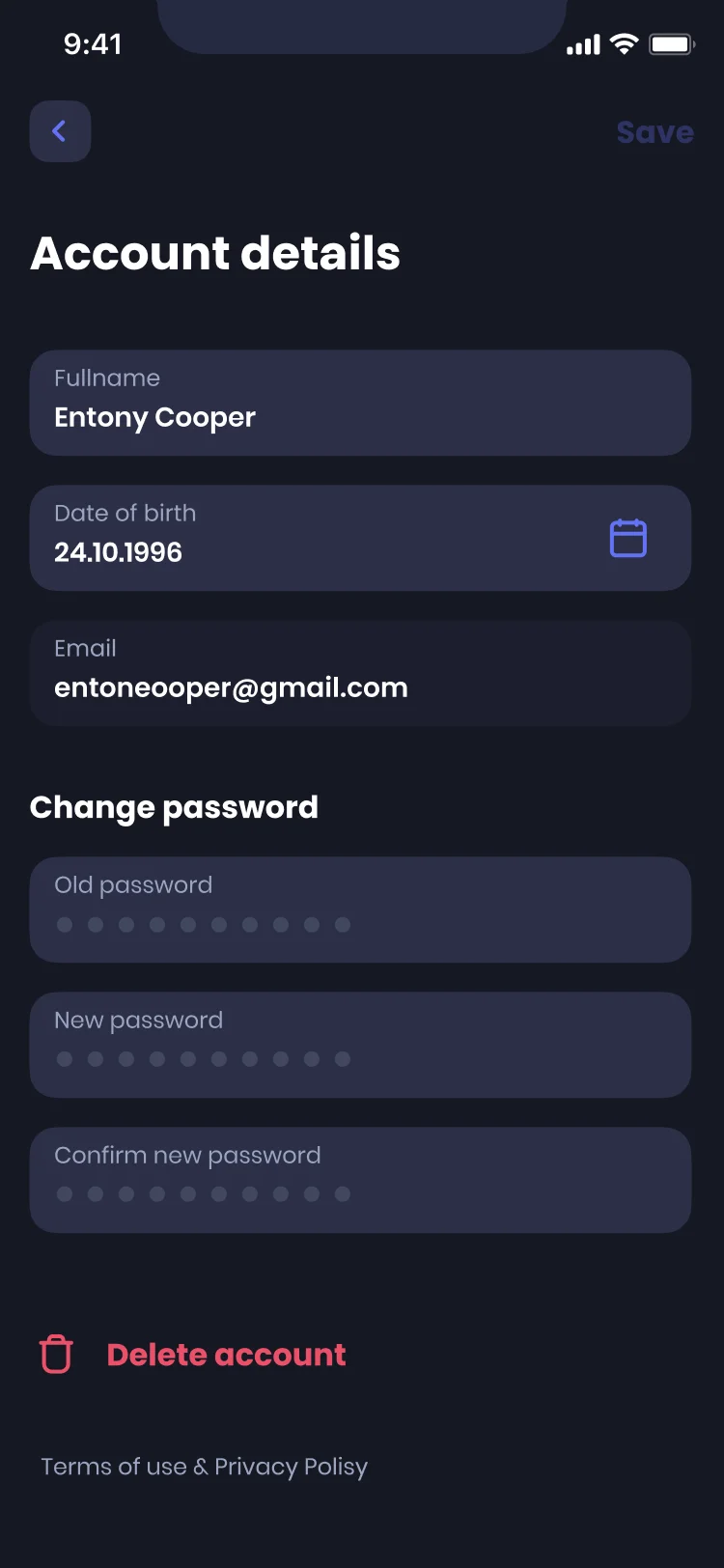
App settings